CAS 20074-67-3
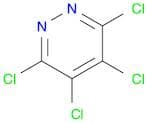
:tetrachloropyridazine
Description:
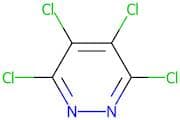
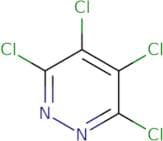
Tetrachloropyridazine is a chemical compound characterized by its pyridazine ring, which is a six-membered aromatic heterocycle containing two nitrogen atoms. The presence of four chlorine atoms attached to the pyridazine structure significantly influences its chemical properties, making it a highly chlorinated derivative. This compound is typically a colorless to pale yellow liquid or solid, depending on its form and purity. It is known for its stability under normal conditions but can be reactive under certain circumstances, particularly in the presence of strong nucleophiles or under extreme conditions. Tetrachloropyridazine is primarily used in agricultural applications, particularly as a herbicide, due to its ability to inhibit specific biochemical pathways in plants. Its environmental persistence and potential toxicity necessitate careful handling and regulation. Additionally, the compound's unique structure allows for various chemical reactions, making it of interest in synthetic organic chemistry. Safety data sheets should be consulted for handling precautions, as chlorinated compounds can pose health risks if not managed properly.
Formula:C4Cl4N2
InChI:InChI=1/C4Cl4N2/c5-1-2(6)4(8)10-9-3(1)7
SMILES:c1(c(c(Cl)nnc1Cl)Cl)Cl
Synonyms:- Pyridazine, 3,4,5,6-Tetrachloro-
- Pyridazine, tetrachloro-
- Tetrachloropyridazine
Sort by
Purity (%)
0
100
|
0
|
50
|
90
|
95
|
100
Found 4 products.
Pyridazine, 3,4,5,6-tetrachloro-
CAS:Formula:C4Cl4N2Purity:95%Color and Shape:SolidMolecular weight:217.8682Tetrachloropyridazine
CAS:Tetrachloropyridazine is a reactive chlorine atom that is a byproduct of the production of chlorofluorocarbons. It is an intermediate in the synthesis of the pesticide DDT. The molecule is also used as a reagent in organic synthesis and in the synthesis of other compounds such as trifluoroacetic acid, nitro, and diazonium salt. Tetrachloropyridazine has been shown to be cytotoxic against cancer cells. Tetrachloropyridazine reacts with DNA at N7-position on purines, leading to its reactivity with nucleophiles such as amines and alcohols. The reaction mechanism begins with nucleophilic attack on the electron deficient nitrogen atoms, followed by elimination of hydrogen chloride and formation of a stable heterocycle.Formula:C4Cl4N2Purity:Min. 95%Molecular weight:217.87 g/mol