CAS 20146-59-2
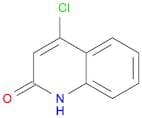
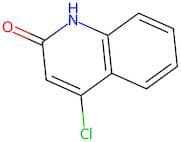
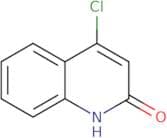
:4-chloroquinolin-2(1H)-one
Description:
4-Chloroquinolin-2(1H)-one, with the CAS number 20146-59-2, is a heterocyclic organic compound characterized by a quinoline structure that features a chlorine atom and a ketone functional group. This compound typically exhibits a pale yellow to light brown appearance and is soluble in organic solvents such as ethanol and dimethyl sulfoxide (DMSO). Its molecular structure includes a quinoline ring, which contributes to its potential biological activity, making it of interest in medicinal chemistry and drug development. The presence of the chloro substituent can influence its reactivity and interaction with biological targets. 4-Chloroquinolin-2(1H)-one may exhibit antimicrobial, antiviral, or anticancer properties, although specific biological activities can vary based on the context of use. As with many organic compounds, safety precautions should be taken when handling it, as it may pose health risks if ingested or inhaled. Proper storage conditions are also essential to maintain its stability and integrity.
Formula:C9H6ClNO
InChI:InChI=1/C9H6ClNO/c10-7-5-9(12)11-8-4-2-1-3-6(7)8/h1-5H,(H,11,12)
SMILES:c1ccc2c(c1)c(cc(n2)O)Cl
Synonyms:- 2-Quinolinol, 4-Chloro-
- 4-Chloro-2-hydroxyquinoline
- 4-Chloroquinolin-2-ol
Sort by
Purity (%)
0
100
|
0
|
50
|
90
|
95
|
100
Found 4 products.
2(1H)-Quinolinone, 4-chloro-
CAS:Formula:C9H6ClNOPurity:97%Color and Shape:SolidMolecular weight:179.60304-Chloroquinolin-2(1H)-one
CAS:Formula:C9H6ClNOPurity:97%Color and Shape:Solid, Beige powderMolecular weight:179.64-Chloroquinolin-2(1H)-one
CAS:4-Chloroquinolin-2(1H)-one is a diphenyl ether with a molecular weight of 152.14. It has been shown to inhibit the growth of cancer cells in vitro and in vivo. It binds to amines that are present on the surface of collagen and nintedanib, which is used to treat pulmonary arterial hypertension, and prevents their aggregation. The compound also inhibits cross-coupling reactions between chloride ions and 5-chloro-8-hydroxyquinoline, which is used as an antihypertensive drug. 4-Chloroquinolin-2(1H)-one has been shown to have significant kinetic properties that can be studied using magnetic resonance spectroscopy (MRS). This chemical's mechanism of action is not well understood, but it has been shown to undergo tautomerization when exposed to dimethylformamide, a solvent commonly found in wastewater.Formula:C9H6ClNOPurity:Min. 95%Molecular weight:179.6 g/mol