![1,2-Benzenedicarboxylic acid, 4-[(R)-aminocarboxymethyl]-](/_next/image/?url=https%3A%2Fstatic.cymitquimica.com%2Fcas-image%2Fthumb-webp%2F33049-12-benzenedicarboxylic-acid-4-r-aminocarboxymethyl.webp&w=3840&q=75)
CAS 201730-10-1
:1,2-Benzenedicarboxylic acid, 4-[(R)-aminocarboxymethyl]-
Description:
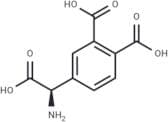
1,2-Benzenedicarboxylic acid, 4-[(R)-aminocarboxymethyl]- is an organic compound characterized by its dual carboxylic acid functional groups and an amino acid side chain. This compound features a benzene ring with two carboxylic acid groups located at the 1 and 2 positions, which contribute to its acidity and potential for forming hydrogen bonds. The presence of the (R)-aminocarboxymethyl group at the 4-position introduces chirality, making this compound optically active. This structural arrangement allows for various interactions, including potential chelation with metal ions, which can be significant in biological and environmental contexts. The compound may exhibit properties such as solubility in polar solvents and the ability to participate in acid-base reactions. Its applications could range from pharmaceuticals to materials science, depending on its reactivity and interaction with other substances. Overall, the unique combination of functional groups and the aromatic system provides a versatile platform for further chemical modifications and applications.
Formula:C10H9NO6
Sort by
Purity (%)
0
100
|
0
|
50
|
90
|
95
|
100
Found 3 products.
1,2-Benzenedicarboxylic acid, 4-[(R)-aminocarboxymethyl]-
CAS:Formula:C10H9NO6Molecular weight:239.1816(R)-3,4-DCPG
CAS:(R)-3,4-DCPG is a metabotropic glutamate receptor agonist that has been shown to have potentiating effects in the brain. It is expressed in the cerebral cortex and has been shown to be effective against epilepsy. (R)-3,4-DCPG has been shown to act as an agonist of the mGlu2 receptor and is used as a model drug for studying this receptor. It binds to the mGlu2 receptor with high affinity and potentiates its activity by increasing calcium influx into neurons. This leads to increased activation of second messenger systems, such as phospholipase C, which then causes a cascade of events leading to the release of glutamate from presynaptic terminals. This potentiation leads to an increase in stimulation of postsynaptic receptors and an increase in neuronal excitability.Formula:C10H9NO6Purity:Min. 95%Molecular weight:239.18 g/mol(R)-3,4-DCPG
CAS:AMPA receptor antagonist with weak activity at NMDA receptors and little activity at kainate receptorsFormula:C10H9NO6Purity:98%Color and Shape:SolidMolecular weight:239.18
![1,2-Benzenedicarboxylic acid, 4-[(R)-aminocarboxymethyl]-](/_next/image/?url=https%3A%2Fstatic.cymitquimica.com%2Fproducts%2FIN%2Fthumb%2FDA0027T4.jpg&w=3840&q=75)