CAS 20189-42-8
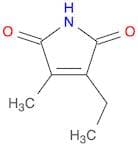
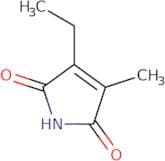
:3-ethyl-4-methyl-1H-pyrrole-2,5-dione
Description:
3-Ethyl-4-methyl-1H-pyrrole-2,5-dione, also known as a derivative of pyrrole, is characterized by its unique bicyclic structure that includes a pyrrole ring with two carbonyl groups at the 2 and 5 positions. This compound typically exhibits a yellow to orange color and is soluble in organic solvents, reflecting its non-polar characteristics. It is known for its reactivity due to the presence of the electron-deficient pyrrole ring, making it a potential candidate for various chemical reactions, including electrophilic substitutions and cycloadditions. The presence of ethyl and methyl substituents enhances its steric and electronic properties, influencing its reactivity and stability. Additionally, this compound may exhibit biological activity, making it of interest in medicinal chemistry and materials science. Its applications can range from organic synthesis to potential roles in pharmaceuticals, although specific uses may vary based on ongoing research and development. As with many chemical substances, proper handling and safety measures should be observed due to potential toxicity or reactivity.
Formula:C7H9NO2
InChI:InChI=1/C7H9NO2/c1-3-5-4(2)6(9)8-7(5)10/h3H2,1-2H3,(H,8,9,10)
SMILES:CCC1=C(C)C(=NC1=O)O
Synonyms:- 1H-pyrrole-2,5-dione, 3-ethyl-4-methyl-
- 2-Ethyl-3-Methylmaleimide
- 3-Ethyl-4-Methyl-Pyrrole-2,5-Dione
Sort by
Purity (%)
0
100
|
0
|
50
|
90
|
95
|
100
Found 4 products.
3-Ethyl-4-methylpyrrole-2,5-dione
CAS:Formula:C7H9NO2Purity:98.0%Color and Shape:SolidMolecular weight:139.15193-Ethyl-4-methyl-1H-pyrrole-2,5-dione
CAS:Controlled ProductFormula:C7H9NO2Color and Shape:NeatMolecular weight:139.153-Ethyl-4-methyl-pyrrole-2,5-dione
CAS:3-Ethyl-4-methylpyrrole-2,5-dione is a chlorophyll analog. It has been found to be an electron donor in photosystem II of the chlorobium reaction center. The compound was prepared by evaporation of a solution of chlorobenzene and ethyl acetoacetate in carbon tetrachloride with the aid of a vacuum pump. 3-Ethyl-4-methylpyrrole-2,5-dione has also been used as a reagent for the preparation of phycocyanin from Spirulina platensis, which is an important component of blue algae. The compound reacts with phenoxy and furyl groups under acidic conditions to produce carboxylate and calcium carbonate, respectively. Oxidation products are formed in reactions with ethyl group and other organic compounds under alkaline conditions.
Formula:C7H9NO2Purity:Min. 95%Molecular weight:139.15 g/mol