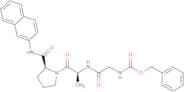
![L-Prolinamide,N-[(phenylmethoxy)carbonyl]glycyl-L-alanyl-N-2-naphthalenyl-](/_next/image/?url=https%3A%2Fstatic.cymitquimica.com%2Fcas-image%2Fthumb-webp%2F406211-l-prolinamide-n-phenylmethoxy-carbonyl-glycyl-l-alanyl-n-2-naphthalenyl.webp&w=3840&q=75)
CAS 202001-62-5
:L-Prolinamide,N-[(phenylmethoxy)carbonyl]glycyl-L-alanyl-N-2-naphthalenyl-
Description:
L-Prolinamide, N-[(phenylmethoxy)carbonyl]glycyl-L-alanyl-N-2-naphthalenyl- is a synthetic compound that belongs to the class of amino acid derivatives. It features a prolinamide backbone, which is modified with a phenylmethoxycarbonyl group and a naphthalenyl substituent. This structure suggests that the compound may exhibit unique properties related to its stereochemistry and functional groups, potentially influencing its solubility, reactivity, and biological activity. The presence of the naphthalene moiety may impart aromatic characteristics, while the amino acid components could contribute to interactions with biological systems, such as enzyme binding or receptor activity. The compound's specific applications could range from pharmaceutical development to research in peptide synthesis or molecular biology. However, detailed studies would be necessary to elucidate its precise characteristics, including its stability, reactivity, and potential therapeutic uses. As with many synthetic compounds, safety and handling precautions should be observed, particularly in laboratory settings.
Formula:C28H30N4O5
Sort by
Purity (%)
0
100
|
0
|
50
|
90
|
95
|
100
Found 2 products.
L-Prolinamide, N-[(phenylmethoxy)carbonyl]glycyl-L-alanyl-N-2-naphthalenyl- (9CI)
CAS:Formula:C28H30N4O5Molecular weight:502.5616Z-Gly-Ala-Pro-bNA
CAS:Z-Gly-Ala-Pro-bNA is a peptidase that hydrolyzes peptides. The peptidase has two catalytic domains, which are located at the N and C termini of the protein. The N-terminal domain contains an oligopeptidase motif that has been shown to be important for the hydrolysis of substrates with hydrophobic residues. The C-terminal domain contains a cavity, which is necessary for binding to substrate and catalysis. This catalytic domain also contains an acid substitution, which may contribute to its stability in acidic environments. A mutant form of Z-Gly-Ala-Pro-bNA was generated by changing the amino acid residue at position n from serine to asparagine, which led to an increase in thermostability and in catalytic activity.Formula:C28H30N4O5Purity:Min. 95%Molecular weight:502.56 g/mol
![L-Prolinamide, N-[(phenylmethoxy)carbonyl]glycyl-L-alanyl-N-2-naphthalenyl- (9CI)](/_next/image/?url=https%3A%2Fstatic.cymitquimica.com%2Fproducts%2FIN%2Fthumb%2FDA0027ZS.jpg&w=3840&q=75)