CAS 20202-05-5
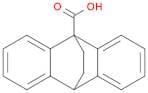
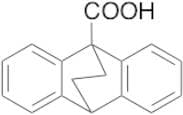
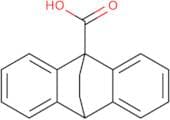
:9,10-ethanoanthracene-9(10H)-carboxylic acid
Description:
9,10-Ethanoanthracene-9(10H)-carboxylic acid is an organic compound characterized by its polycyclic aromatic structure, which includes an ethano group fused to the anthracene framework. This compound features a carboxylic acid functional group, which imparts acidic properties and enhances its solubility in polar solvents. The presence of the ethano group modifies the electronic properties of the anthracene core, potentially influencing its reactivity and interactions with other molecules. Typically, compounds like this are studied for their photophysical properties, including fluorescence and absorption characteristics, which can be relevant in fields such as organic electronics and materials science. Additionally, the carboxylic acid group allows for potential derivatization, making it useful in synthetic chemistry. Its CAS number, 20202-05-5, facilitates its identification in chemical databases and literature. Overall, 9,10-ethanoanthracene-9(10H)-carboxylic acid is of interest for both its structural features and its potential applications in various chemical and material science domains.
Formula:C17H14O2
InChI:InChI=1/C17H14O2/c18-16(19)17-10-9-11(12-5-1-3-7-14(12)17)13-6-2-4-8-15(13)17/h1-8,11H,9-10H2,(H,18,19)
SMILES:c1ccc2c(c1)C1CCC2(c2ccccc12)C(=O)O
Sort by
Purity (%)
0
100
|
0
|
50
|
90
|
95
|
100
Found 3 products.
9,10-Ethanoanthracene-9(10H)-carboxylic acid
CAS:Formula:C17H14O2Color and Shape:SolidMolecular weight:250.29199,10-Dihydro-9,10-ethanoanthracene-9-carboxylic Acid
CAS:Controlled ProductFormula:C17H14O2Color and Shape:NeatMolecular weight:250.299,10-Dihydro-9,10-ethanoanthracene-9-carboxylic acid
CAS:9,10-Dihydro-9,10-ethanoanthracene-9-carboxylic acid (DECA) is a halogenated aliphatic carboxylic acid that can be used as an oxidizing agent. It is a diluent in the synthesis of other compounds and can also act as a catalyst for reactions involving carboxylic acids. DECA has been shown to selectively oxidize carboxylic acids with one or more carbon atoms in the aliphatic chain. This is often done with propionic acid, which is oxidized to acrylic acid. The selectivity of DECA for this reaction is attributed to its ability to react with the carbonyl group in the carbon chain due to its electron withdrawing properties.Formula:C17H14O2Purity:Min. 95%Molecular weight:250.29 g/mol