CAS 20245-39-0
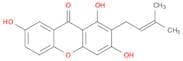
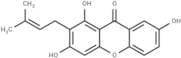
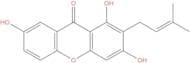
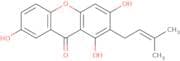
:9H-Xanthen-9-one, 1,3,7-trihydroxy-2-(3-methyl-2-butenyl)-
Description:
9H-Xanthen-9-one, 1,3,7-trihydroxy-2-(3-methyl-2-butenyl)-, also known by its CAS number 20245-39-0, is an organic compound characterized by its xanthone structure, which features a fused benzopyranone system. This compound contains multiple hydroxyl groups, specifically at the 1, 3, and 7 positions, contributing to its potential for hydrogen bonding and solubility in polar solvents. The presence of a 3-methyl-2-butenyl substituent at the 2-position enhances its lipophilicity and may influence its biological activity. Xanthones are known for their diverse pharmacological properties, including antioxidant, anti-inflammatory, and antimicrobial activities. The structural features of this compound suggest it may exhibit significant reactivity and interaction with biological systems, making it of interest in medicinal chemistry and natural product research. Its stability, solubility, and reactivity can vary based on environmental conditions, such as pH and temperature, which are important considerations for its application in various fields, including pharmaceuticals and biochemistry.
Formula:C18H16O5
Sort by
Purity (%)
0
100
|
0
|
50
|
90
|
95
|
100
Found 4 products.
9H-Xanthen-9-one, 1,3,7-trihydroxy-2-(3-methyl-2-buten-1-yl)-
CAS:Formula:C18H16O5Molecular weight:312.31661,3,7-Trihydroxy-2-prenylxanthone
CAS:1,3,7-Trihydroxy-2-prenylxanthone (Isombarraxanthone) shows weak antibacterial activity against the bacterium.Formula:C18H16O5Purity:98%Color and Shape:SolidMolecular weight:312.321,3,7-Trihydroxy-2-prenylxanthone
CAS:Formula:C18H16O5Purity:95%~99%Color and Shape:Yellow powderMolecular weight:312.3211,3,7-Trihydroxy-2-prenylxanthone
CAS:1,3,7-Trihydroxy-2-prenylxanthone (1,3,7-TPX) is a natural compound that has been shown to have antidepressant and antimicrobial effects. It is a serotonin receptor antagonist that inhibits locomotor activity in mice. 1,3,7-TPX has been shown to inhibit the growth of enterococci and trypanosomatides in vitro. This compound also has a synergistic effect with other antimicrobial agents such as mesua ferrosa and chloride. Animal studies have shown that 1,3,7-TPX can be used for the treatment of depression or anxiety disorders by inhibiting the reuptake of serotonin from the synapse.Formula:C18H16O5Purity:Min. 95%Molecular weight:312.3 g/mol