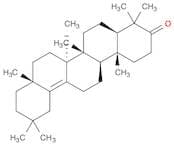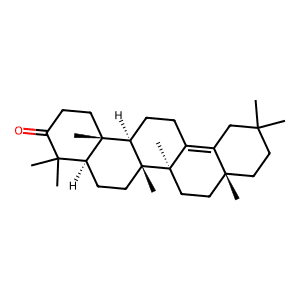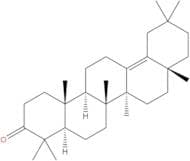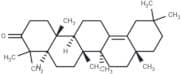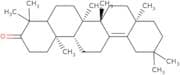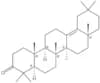
CAS 20248-08-2
:α-Amyrenone
- Olean-13(18)-en-3-one
- δ-Amyrenone
- δ-Amyrone
- 3-Oxo-Δ13(18)-oleanene
- (6aR,6bS,8aR,14aR,14bR)-4,4,6a,6b,8a,11,11,14b-octamethyl-2,4a,5,6,7,8,9,10,12,13,14,14a-dodecahydro-1H-picen-3-one
- α-Amyrenone
- 5α-Olean-13(18)-en-3-one
- 13(18)-Oleanen-3-one
- δ-Amyrenane
- Delta-Amyrone
Ref: IN-DA00289W
1gTo inquire1mg165.00€5mg277.00€10mg547.00€20mg576.00€25mgTo inquire50mgTo inquire100mgTo inquire200mgTo inquire500mgTo inquireδ-Amyrenone
CAS:δ-Amyrenone (Delta-Amyrone), isolated from S. lineare, has anti-inflammatory effects.Formula:C30H48OPurity:99.68%Color and Shape:SolidMolecular weight:424.713(18)-Oleanen-3-one
CAS:Controlled Product13(18)-Oleanen-3-one (13EO) is a chemical compound that has been shown to have antiviral activity against HIV. It was developed as a potential treatment for AIDS in the 1990s and has been shown to inhibit the virus at an early stage of its life cycle. The mechanism of action is not yet fully understood, but it appears that 13EO inhibits the reverse transcription process by binding to the RNA polymerase enzyme. Treatment with 13EO also reduces symptoms of hepatitis caused by Rhamnitrin and may be effective for treating herpes simplex infections. 13EO binds to chloride ions in the human body, which may account for its inhibition of viral replication.
13EO has been shown to increase production of β-amyrin and stilbene derivatives in cells. These compounds are known to have anti-inflammatory effects and may play a role in the antiviral activity seen with 13EO treatment.Formula:C30H48OPurity:Min. 95%Molecular weight:424.7 g/mol