CAS 2026-48-4
:1-Butanol, 2-amino-3-methyl-, (2S)-
Description:
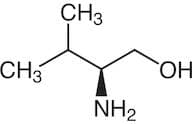
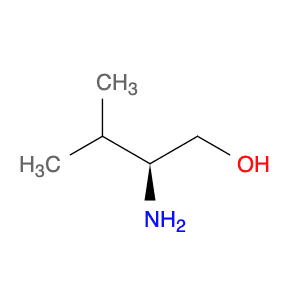
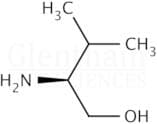
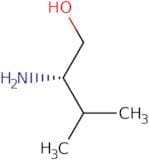
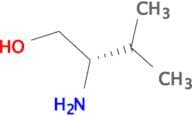
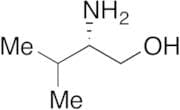
1-Butanol, 2-amino-3-methyl-, (2S)-, also known as (S)-2-amino-3-methyl-1-butanol, is an organic compound characterized by its amino alcohol structure. It features a butanol backbone with an amino group (-NH2) and a methyl group (-CH3) attached to the second and third carbon atoms, respectively. This compound is a chiral molecule, with the (2S) designation indicating its specific stereochemistry. It is typically a colorless to pale yellow liquid with a characteristic odor and is soluble in water due to the presence of the hydroxyl (-OH) group. The presence of both the amino and hydroxyl functional groups allows it to participate in hydrogen bonding, influencing its physical properties and reactivity. 1-Butanol, 2-amino-3-methyl-, (2S)- is often used in various chemical syntheses and may serve as an intermediate in the production of pharmaceuticals or agrochemicals. Its biological activity and potential applications in medicinal chemistry are areas of ongoing research.
Formula:C5H13NO
InChI:InChI=1S/C5H13NO/c1-4(2)5(6)3-7/h4-5,7H,3,6H2,1-2H3/t5-/m1/s1
InChI key:InChIKey=NWYYWIJOWOLJNR-RXMQYKEDSA-N
SMILES:[C@H](C(C)C)(CO)N
Synonyms:- (+)-(S)-Valinol
- (+)-2-Amino-3-methyl-1-butanol
- (+)-Valinol
- (2S)-1-Hydroxy-3-methylbutan-2-amine
- (2S)-2-Amino-3-methyl-1-butanol
- (2S)-Valinol
- (S)-(+)-2-Amino-3-methyl-1-butanol
- (S)-2-Amino-3-methylbutanol
- 1-Butanol, 2-amino-3-methyl-, (S)-
- 1-Butanol, 2-amino-3-methyl-, <span class="text-smallcaps">L</span>-
- 1-Butanol, 2-amino-3-methyl-, L-
- <span class="text-smallcaps">L</span>-Valinol
- Butanol, 2-Amino-3-Methyl, (S)-(+)-
- L-2-amino-3-methylbutan-1-ol
- L-2-amino-3-methylbutane-1-ol
- L-2-amino-3-metilbutan-1-ol
- L-Valinol
- Nsc 322922
- [(S)-1-(Hydroxymethyl)-2-methylpropyl]amine
- Valinol,97%
- (2R)-2-amino-3-methylbutan-1-ol
- 1-Butanol, 2-amino-3-methyl-, (2S)-
- H-Val-ol
- (S)-2-Amino-3-methyl-butanol
- See more synonyms
Sort by
Purity (%)
0
100
|
0
|
50
|
90
|
95
|
100
Found 9 products.
L-Valinol
CAS:Formula:C5H13NOPurity:>97.0%(GC)(T)Color and Shape:White or Colorless to Light orange to Yellow powder to lump to clear liquidMolecular weight:103.17L-(+)-Valinol, 97%
CAS:L-(+)-Valinol reacts with aldehydes and nitriles to form imines and oxazolines, respectively, for asymmetric synthesis. It is also used for preparation of 4-isopropyloxazolidinones, employed in stereocontrolled aldol and alkylation reactions, synthesis of chiral 2-thiazolidinethiones for aldol reactFormula:C5H13NOPurity:97%Color and Shape:Colourless/white to yellow, liquid/low melting solidMolecular weight:103.171-Butanol, 2-amino-3-methyl-, (2S)-
CAS:Formula:C5H13NOPurity:96%Color and Shape:LiquidMolecular weight:103.1628(S)-(+)-2-Amino-3-methyl-1-butanol
CAS:(S)-(+)-2-Amino-3-methyl-1-butanolFormula:C5H13NOPurity:97%Color and Shape: colourless to light yellow crystalline solidMolecular weight:103.16g/molL-Valinol
CAS:Formula:C5H13NOPurity:≥ 97.0%Color and Shape:Colourless to white or pale yellow solid, crystals or liquidMolecular weight:103.17L-Valinol
CAS:L-Valinol is a model system that is used to study the reaction of aziridines with oxygen nucleophiles. It has been shown that this reaction proceeds through the formation of an intermediate, hydrogen tartrate, followed by a second step with nitrogen atoms as the nucleophile and alcohol residue as the substrate. The use of L-valinol in asymmetric synthesis was also demonstrated. In this process, amides were obtained with high enantioselectivity by reacting L-valinol with amines in acidic conditions. This synthetic pathway was found to be synergic with other reactions, such as nitroolefination and benzoylation.Formula:C5H13NOPurity:Min. 95%Color and Shape:Solidified MassMolecular weight:103.16 g/molL-Valinol
CAS:M03447 - L-Valinol
Formula:C5H13NOPurity:95%Color and Shape:LiquidMolecular weight:103.165L-Valinol
CAS:Controlled ProductApplications L-Valinol is used as a reagent in the synthesis of simple 1,3-thiazolidine-2-thione derivatives which can exhibit fungicidal activity. L-Valinol is also used as a reagent in the synthesis of small-molecule inhibitors of MDM2-p53 protein-protein interaction (MDM2 inhibitors) in clinical trials for the treatment of cancer.
References Chen, N., et al.: Phosphorus Sulfur, 190, 112 (2015); Zhao, Y., et al.: J. Med. Chem., 58, 1038 (2015)Formula:C5H13NOColor and Shape:WhiteMolecular weight:103.163