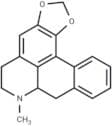
![(7aS)-7-methyl-6,7,7a,8-tetrahydro-5H-[1,3]benzodioxolo[6,5,4-de]benzo[g]quinoline](/_next/image/?url=https%3A%2Fstatic.cymitquimica.com%2Fcas-image%2Fthumb-webp%2F303063-7as-7-methyl-677a-8-tetrahydro-5h-13-benzodioxolo-654-de-benzo-g-quinoline.webp&w=3840&q=75)
CAS 2030-53-7
:(7aS)-7-methyl-6,7,7a,8-tetrahydro-5H-[1,3]benzodioxolo[6,5,4-de]benzo[g]quinoline
Description:
The chemical substance known as (7aS)-7-methyl-6,7,7a,8-tetrahydro-5H-[1,3]benzodioxolo[6,5,4-de]benzo[g]quinoline, with the CAS number 2030-53-7, is a complex organic compound characterized by its unique bicyclic structure that incorporates both benzodioxole and quinoline moieties. This compound features a tetrahydro configuration, indicating the presence of a saturated ring system, which contributes to its stability and potential biological activity. The presence of a methyl group at the 7 position adds to its structural diversity and may influence its interactions with biological targets. Such compounds are often studied for their potential pharmacological properties, including antitumor, antimicrobial, or neuroprotective effects. The intricate arrangement of its rings and substituents suggests that it may exhibit interesting electronic properties and reactivity patterns, making it a subject of interest in medicinal chemistry and drug development. Further research is necessary to fully elucidate its properties and potential applications in various fields.
Formula:C18H17NO2
InChI:InChI=1/C18H17NO2/c1-19-7-6-12-9-15-18(21-10-20-15)17-13-5-3-2-4-11(13)8-14(19)16(12)17/h2-5,9,14H,6-8,10H2,1H3/t14-/m0/s1
SMILES:CN1CCc2cc3c(c4c5ccccc5C[C@H]1c24)OCO3
Synonyms:- (+)-Roemerine
- (S)-6,7,7a,8-Tetrahydro-7-methyl-5H-benzo[g]-1,3-benzodioxolo[6,5,4-de]quinoline
- 2030-53-7
- Aporheine
Sort by
Purity (%)
0
100
|
0
|
50
|
90
|
95
|
100
Found 4 products.
Aporheine
CAS:Aporheine is a natural product from Phellinus igniarius.Formula:C18H17NO2Purity:98%Color and Shape:SolidMolecular weight:279.339Aporeine
CAS:Aporeine is an alkaloid compound, which is a nitrogen-containing compound naturally occurring in various plant species. It is derived from botanical sources, often isolated through extraction and purification processes from specific plants known to produce alkaloids. The mode of action of aporeine involves interaction with biological macromolecules, where it can influence cellular processes and biochemical pathways. By binding to enzymes, receptors, or nucleic acids, it can elicit a range of biological effects, varying based on concentration and chemical structure.Formula:C18H17NO2Purity:Min. 95%Molecular weight:279.3 g/mol