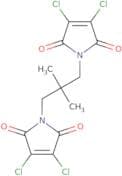
CAS 203115-63-3
:Sort by
Purity (%)
0
100
|
0
|
50
|
90
|
95
|
100
Found 5 products.
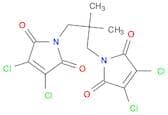
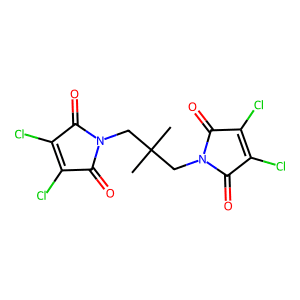
1H-Pyrrole-2,5-dione, 1,1'-(2,2-dimethyl-1,3-propanediyl)bis[3,4-dichloro- (9CI)
CAS:Formula:C13H10Cl4N2O4Purity:98%Color and Shape:SolidMolecular weight:400.0415NSC 617145
CAS:NSC 617145 (NSC617145) is an inhibitor of WRN helicase that inhibits the ATPase, but not exonuclease, activity of WRN helicase in a concentration-dependentFormula:C13H10Cl4N2O4Purity:99.78%Color and Shape:SolidMolecular weight:400.04Ref: TM-T9168
1mg34.00€2mg49.00€5mg73.00€1mL*10mM (DMSO)80.00€10mg90.00€25mg164.00€50mg227.00€100mg358.00€500mg842.00€NSC 617145
CAS:Controlled ProductApplications NSC 617145 is ahelicase inhibitor used in the treatment of Werner syndrome helicase and acts synergistically with Mitomycin C (M371900), an antitumor antibiotic. It is used as antineoplastic.
References Kinoshita, S., et al.: J. Med. Chem., 14, 13 (1971), Beijnen, J.H., et al.: Anal. Profiles Drug Subs., 16, 361 (1986),Formula:C13H10Cl4N2O4Color and Shape:NeatMolecular weight:400.04NSC 617145
CAS:NSC 617145 is a molecule that inhibits leukemia inhibitory factor (LIF) activity by binding to the receptor LIFR. It has been shown to have an apoptotic effect on cells and may be a potential drug target for the treatment of cancer. This compound also has pro-apoptotic properties and can induce mitochondrial membrane depolarization, leading to cell death. NSC 617145 has also been shown to inhibit the production of epidermal growth factor (EGF) in gland cells, which may contribute to its role in tumorigenesis. This compound induces apoptosis in human pathogens such as Helicobacter pylori, Chlamydia pneumoniae, and Candida albicans, but not in normal human cells.Formula:C13H10Cl4N2O4Purity:Min. 95%Molecular weight:400.04 g/mol