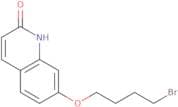
CAS 203395-59-9
:Sort by
Purity (%)
0
100
|
0
|
50
|
90
|
95
|
100
Found 10 products.
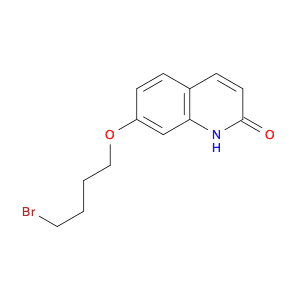
Aripiprazole Bromobutoxyquinolinone Analog (7-(4-bromobutoxy)quinolin-2(1H)-one)
CAS:Lactams, nesoiFormula:C13H14BrNO2Color and Shape:White Off-White SolidMolecular weight:295.020797-(4-Bromobutoxy)-quinoline-2(1h)-one
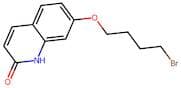
CAS:Formula:C13H14BrNO2Purity:95%Color and Shape:SolidMolecular weight:296.1598Aripiprazole Impurity 41
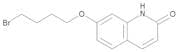
CAS:Formula:C13H14BrNO2Color and Shape:White To Off-White SolidMolecular weight:296.167-(4-Bromobutoxy)quinolin-2(1H)-one
CAS:7-(4-Bromobutoxy)quinolin-2(1H)-onePurity:95%Molecular weight:296.16g/mol7-(4-Bromobutoxy)quinolin-2(1H)-one
CAS:Formula:C13H14BrNO2Purity:95%Color and Shape:SolidMolecular weight:296.1647-(4-Bromobutoxy)-quinoline-2(1H)-one
CAS:Controlled ProductFormula:C13H14BrNO2Color and Shape:NeatMolecular weight:296.167-(4-Bromobutoxy)-quinoline-2(1H)-one
CAS:7-(4-Bromobutoxy)-quinoline-2(1H)-one is a chemical compound that is used as a chemical intermediate in the synthesis of other pharmaceuticals. It is synthesized by a convergent method starting from 4-bromo-2-butanone and piperazine. This process involves three steps: 1) the bromination of 4-bromo-2-butanone, 2) the reaction of the resulting bromide with piperazine to form 7-(4-bromobutoxy)-piperazinium chloride, and 3) the subsequent hydrolysis of this product to produce 7-(4-bromobutoxy)-quinoline-2(1H)-one. The trifluoromethanesulfonic acid catalyst is used for these reactions.Formula:C13H14BrNO2Purity:Min. 95%Molecular weight:296.16 g/mol