CAS 2040-88-2
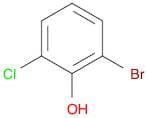
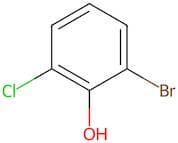
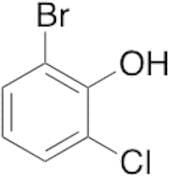
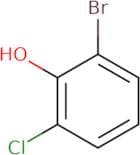
:2-bromo-6-chlorophenol
Description:
2-Bromo-6-chlorophenol is an organic compound that belongs to the class of halogenated phenols. It features a phenolic structure with two halogen substituents: a bromine atom at the second position and a chlorine atom at the sixth position of the aromatic ring. This compound is typically a solid at room temperature and is characterized by its moderate solubility in organic solvents and limited solubility in water due to the presence of the hydrophobic aromatic ring and halogen substituents. 2-Bromo-6-chlorophenol exhibits antimicrobial properties, making it useful in various applications, including as a preservative and in the synthesis of other chemical compounds. Its reactivity is influenced by the electron-withdrawing effects of the halogens, which can affect its behavior in chemical reactions, such as nucleophilic substitutions. Safety precautions should be taken when handling this compound, as it may pose health risks, including skin and respiratory irritation. Proper storage and disposal methods are essential to mitigate environmental impact.
Formula:C6H4BrClO
InChI:InChI=1/C6H4BrClO/c7-4-2-1-3-5(8)6(4)9/h1-3,9H
SMILES:c1cc(c(c(c1)Cl)O)Br
Synonyms:- Phenol, 2-bromo-6-chloro-
Sort by
Purity (%)
0
100
|
0
|
50
|
90
|
95
|
100
Found 5 products.
Phenol, 2-bromo-6-chloro-
CAS:Formula:C6H4BrClOPurity:96%Color and Shape:SolidMolecular weight:207.45242-Bromo-6-chlorophenol
CAS:2-Bromo-6-chlorophenol
Formula:C6H4BrClOPurity:≥95%Color and Shape: white crystalline solidMolecular weight:207.45g/mol2-Bromo-6-chlorophenol
CAS:Controlled ProductApplications 2-bromo-6-chlorophenol (cas# 2040-88-2) is a useful research chemical.
Formula:C6H4BrClOColor and Shape:NeatMolecular weight:207.452-Bromo-6-chlorophenol
CAS:2-Bromo-6-chlorophenol is a reactive, thiourea-containing compound that undergoes catalytic reactions. 2-Bromo-6-chlorophenol reacts with sulfate in water to form chlorine radicals, which react with other organic compounds to produce chlorinated organic compounds. This reaction can be used for the oxidation of phenols and alcohols to yield chlorinated products. The yields of this process depend on the concentration of acetonitrile used in the reaction. Acetonitrile is also required for the conversion of dichlorinated benzenes to brominated products.Formula:C6H4BrClOPurity:Min. 95%Molecular weight:207.45 g/mol