CAS 2050-46-6
:1,2-Diethoxybenzene
Description:
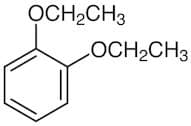
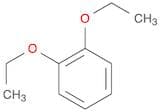
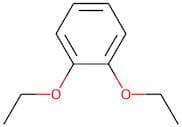
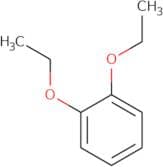
1,2-Diethoxybenzene, also known as o-Diethoxybenzene, is an organic compound characterized by the presence of two ethoxy groups (-OCH2CH3) attached to a benzene ring at the 1 and 2 positions. This compound is a colorless to pale yellow liquid with a sweet, aromatic odor. It is relatively non-polar, which influences its solubility in organic solvents while being less soluble in water. The presence of the ethoxy groups enhances its reactivity, making it useful in various chemical syntheses, including the production of more complex organic molecules. 1,2-Diethoxybenzene can undergo typical aromatic substitution reactions and can be used as a solvent or reagent in organic chemistry. Its physical properties, such as boiling point and density, are influenced by the ethoxy substituents, which also affect its volatility and stability. Safety precautions should be taken when handling this compound, as it may pose health risks if inhaled or ingested.
Formula:C10H14O2
InChI:InChI=1S/C10H14O2/c1-3-11-9-7-5-6-8-10(9)12-4-2/h5-8H,3-4H2,1-2H3
InChI key:InChIKey=QZYDOKBVZJLQCK-UHFFFAOYSA-N
SMILES:O(CC)C1=C(OCC)C=CC=C1
Synonyms:- 1,2-Diethoxybenzene,(Catechol diethyl ether)
- Benzene, 1,2-diethoxy-
- Benzene, o-diethoxy-
- Catechol diethyl ether
- NSC 6189
- o-Diethoxybenzene
- 1,2-Diethoxybenzene
Sort by
Purity (%)
0
100
|
0
|
50
|
90
|
95
|
100
Found 5 products.
1,2-Diethoxybenzene
CAS:Formula:C10H14O2Purity:>98.0%(GC)Color and Shape:White to Almost white powder to crystalMolecular weight:166.22Catechol diethyl ether
CAS:Catechol diethyl ether is an activated form of the catechol. It is used as a control agent in Friedel-Crafts reactions to convert alkenes to epoxides and chlorohydrins. It is also used in the hydrochlorination of aromatic hydrocarbons. This compound has been shown to be an effective activator for the synthesis of monomeric polyester polyurethane from dimeric diols and diisocyanates, with phosphotungstic acid as catalyst. Catechol diethyl ether is soluble in organic solvents such as chloroform or benzene, but insoluble in water. The optimal reaction conditions involve the use of hydroxide solution at pH 9-10 and magnetic resonance spectroscopy at room temperature. Catechol diethyl ether reacts with trifluoromethanesulfonic acid to produce hydrogen chloride gas, which can be removed by passing dry nitrogen gas through it.Formula:C10H14O2Purity:Min. 95%Color and Shape:Clear LiquidMolecular weight:166.22 g/mol1,2-Diethoxybenzene
CAS:Formula:C10H14O2Purity:95.0%Color and Shape:White to almost white powderMolecular weight:166.22