CAS 2050-69-3
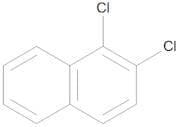
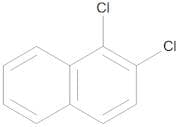
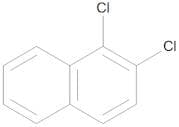
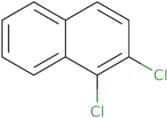
:1,2-dichloronaphthalene
Description:
1,2-Dichloronaphthalene is an aromatic organic compound characterized by the presence of two chlorine atoms attached to a naphthalene ring at the 1 and 2 positions. It is a colorless to pale yellow liquid with a distinctive odor, and it is insoluble in water but soluble in organic solvents such as ethanol and ether. This compound is known for its relatively high boiling point and moderate volatility. It is primarily used as an intermediate in the synthesis of various chemicals, including dyes and pesticides, and can also serve as a solvent in industrial applications. 1,2-Dichloronaphthalene exhibits moderate toxicity, and exposure can lead to health effects, necessitating proper handling and safety precautions. Additionally, it is classified as a potential environmental pollutant, as it can persist in the environment and bioaccumulate in aquatic organisms. Its chemical structure contributes to its reactivity, making it a subject of study in both organic chemistry and environmental science.
Formula:C10H6Cl2
InChI:InChI=1/C10H6Cl2/c11-9-6-5-7-3-1-2-4-8(7)10(9)12/h1-6H
InChI key:InChIKey=MOXLHAPKZWTHEX-UHFFFAOYSA-N
SMILES:ClC=1C2=C(C=CC1Cl)C=CC=C2
Synonyms:- Naphthalene, 1,2-dichloro-
- Nsc 90290
- Pcn 3
- 1,2-Dichloronaphthalene
- 1,2-Dichloronaphthalene
- Butenafine Impurity 75
- naphthalene,1,4-dichloro-
- 1,2-Dichloronaphthalene in Cyclohexane
- 1,2-Dichloronaphthalene 100 μg/mL in Nonane
- 1,2-dichloro-naphthalen
Sort by
Purity (%)
0
100
|
0
|
50
|
90
|
95
|
100
Found 4 products.
1,2-Dichloronaphthalene 100 µg/mL in Nonane
CAS:Formula:C10H6Cl2Color and Shape:Single SolutionMolecular weight:197.061,2-Dichloronaphthalene
CAS:Controlled ProductApplications 1,2-Dichloronaphthalene is an organic pollutant found in wastewater.
References Ryu, J., et. al.: Environ. Sci. Technol., 47, 2394 (2013)Formula:C10H6Cl2Color and Shape:White To Off-WhiteMolecular weight:197.061,2-Dichloronaphthalene
CAS:1,2-Dichloronaphthalene is a naphthalene molecule with two chlorine atoms attached. It has an optical rotation of +29° and birefringence of 0.0022. The oxidant can be found in elemental sulfur or as a byproduct in the processing of silicone rubber, which has a red shift in its frequency range. 1,2-Dichloronaphthalene can also be used as an anion to form polysulfides. Exciton complexes are formed between silicon molecules when they are exposed to 1,2-dichloronaphthalene.
Formula:C10H6Cl2Purity:Min. 95%Color and Shape:PowderMolecular weight:197.06 g/molRef: 3D-CAA05069
Discontinued product