CAS 2051-49-2
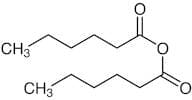
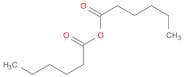
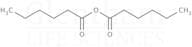
:Hexanoic anhydride
- Caproic acid anhydride
- Caproic anhydride
- Capronic acid anhydride
- Capronic anhydride
- Hexanoic Acid Anhydride
- Hexanoic acid, 1,1′-anhydride
- Hexanoyl anhydride
- N-hexanoic anhydride
- n-Hexanoic acid anhydride
- Hexanoic anhydride
Hexanoic Anhydride
CAS:Formula:C12H22O3Purity:>96.0%(GC)Color and Shape:Colorless to Almost colorless clear liquidMolecular weight:214.31Hexanoic anhydride, 98%
CAS:It is used as a reactant in the synthesis of acremomannolipin A. It is used in green synthesis of esters of acyclovir (acyclovir prodrugs), in the preparation of hexanoyl-modified chitosan nanoparticles, chitosan-based polymeric surfactants via N-acylation of chitosans. This Thermo Scientific ChemiFormula:C12H22O3Purity:98%Color and Shape:Clear colorless to pale yellow, LiquidMolecular weight:214.31Hexanoic acid, 1,1'-anhydride
CAS:Formula:C12H22O3Purity:98%Color and Shape:LiquidMolecular weight:214.3013Hexanoic Anhydride
CAS:Controlled ProductApplications Hexanoic Anhydride, is used as a reactant in the total synthesis of acremomannolipin A via steroselective β-mannosylation of 4,6,-O-benzylidene-protected mannosyl sulfoxide with a D-mannitol derivative.
Not a dangerous good if item is equal to or less than 1g/ml and there is less than 100g/ml in the package
References Tsutsui, N., et al.: Tetrahedron Lett. 54, 451(2013)Formula:C12H22O3Color and Shape:NeatMolecular weight:214.3Hexanoic anhydride
CAS:Hexanoic anhydride is a reactive chemical that is used to synthesize esters and amides. It has been shown to have strong antibiotic resistance against most strains of bacteria, including methicillin-resistant Staphylococcus aureus (MRSA). Hexanoic anhydride has also been found to have antioxidative properties and antimicrobial activity. The optimum concentration for the reaction with hexanoic acid is 1.5 Molar (M) in order to produce caproic acid and alkanoic acid as products. Hexanoic anhydride reacts with hexanoic acid at its hydroxyl group, forming an acetate extract as a byproduct. This reaction mechanism may be due to ionotropic gelation or electrophilic addition of the hydroxyl group.
Formula:C12H22O3Purity:Min. 95%Color and Shape:Colorless Clear LiquidMolecular weight:214.3 g/molRef: 3D-FH35913
Discontinued product