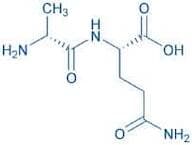
CAS 205252-36-4
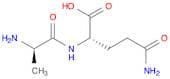
:L-Glutamine, D-alanyl-
Description:
L-Glutamine, D-alanyl- is a dipeptide composed of the amino acids L-glutamine and D-alanine. It is characterized by its role in protein synthesis and cellular metabolism. As a non-essential amino acid, L-glutamine is crucial for various physiological functions, including nitrogen transport and immune system support. The presence of D-alanine, which is the enantiomer of L-alanine, can influence the peptide's stability and biological activity. This compound may exhibit unique properties compared to its L-form counterparts, potentially affecting its solubility, reactivity, and interaction with biological systems. L-Glutamine, D-alanyl- is often studied in the context of nutrition, cell culture, and therapeutic applications, particularly in conditions where amino acid supplementation is beneficial. Its CAS number, 205252-36-4, allows for precise identification in chemical databases and literature. Overall, this dipeptide represents a significant area of interest in biochemistry and pharmacology due to its potential health benefits and applications in various fields.
Formula:C8H15N3O4
Synonyms:- H-D-Ala-Gln-OH
Sort by
Purity (%)
0
100
|
0
|
50
|
90
|
95
|
100
Found 6 products.
(S)-5-Amino-2-((R)-2-Aminopropanamido)-5-Oxopentanoic Acid
CAS:Formula:C8H15N3O4Purity:98%Color and Shape:SolidMolecular weight:217.2224D-Alanyl-L-Glutamine
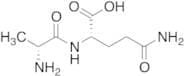
CAS:Formula:C8H15N3O4Color and Shape:White To Off-White SolidMolecular weight:217.23H-D-Ala-Gln-OH
CAS:H-D-Ala-Gln-OH is a modified structural analog of l-fucose that has been shown to be a potent immunostimulant in vitro. The hydrocarbon chain on this molecule is substituted with an H-D-Ala moiety, which provides the molecule with a hydroxyl group. This modification increases the solubility of the molecule, thereby making it more suitable for in vivo administration. Additionally, modifications to the hydrocarbon chain may have functional consequences on the molecule's activity (e.g., substitutions may increase or decrease its ability to induce interleukin).Formula:C8H15N3O4Purity:Min. 95%Molecular weight:217.22 g/molH-D-Ala-Gln-OH
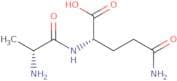
CAS:Potential impurity of L-alanyl-L-glutamine used for glutamine supplementation.Formula:C8H15N3O4Purity:> 99%Color and Shape:WhiteMolecular weight:217.23