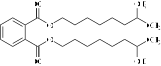
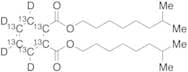
CAS 20548-62-3
:1,2-Benzenedicarboxylicacid, 1,2-bis(7-methyloctyl) ester
Description:
1,2-Benzenedicarboxylic acid, 1,2-bis(7-methyloctyl) ester, commonly known as di(7-methyloctyl) phthalate, is an organic compound belonging to the class of phthalate esters. It is characterized by its structure, which includes two carboxylate groups attached to a benzene ring, with two long alkyl chains derived from 7-methyloctanol. This compound is typically a colorless to pale yellow liquid with low volatility and a relatively high boiling point. It is known for its plasticizing properties, making it useful in the production of flexible plastics and polymers. Additionally, it exhibits moderate solubility in organic solvents and low solubility in water, which influences its applications in various industrial processes. The compound is also studied for its potential environmental and health impacts, as many phthalates are scrutinized for their endocrine-disrupting properties. Overall, 1,2-Benzenedicarboxylic acid, 1,2-bis(7-methyloctyl) ester serves as an important chemical in materials science and industrial applications.
Formula:C26H42O4
Synonyms:- 1,2-Benzenedicarboxylicacid, bis(7-methyloctyl) ester
- Phthalic acid, bis(7-methyloctyl) ester
- 1-Octanol, 7-methyl-, phthalate (2:1)
- Bis(7-methyloctyl) phthalate
Sort by
Purity (%)
0
100
|
0
|
50
|
90
|
95
|
100
Found 5 products.
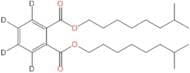
Bis(7-methyl-1-octyl)Phthalate-3,4,5,6-d4
CAS:Formula:C6D4COO(CH2)6CH(CH3)2Purity:99 atom % DColor and Shape:Colorless Liquid.Molecular weight:251.19491Phthalic acid, bis-7-methyloctyl ester
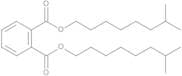
CAS:Controlled ProductFormula:C26H42O4Color and Shape:Colourless To Light YellowMolecular weight:418.6093Diisononyl Phthalate
CAS:Applications A widely used chemical with potential thyroid-disrupting properties. Used in toxicology studies as well as risk assessment studies of food contamination that occurs via migration of phthalates into foodstuffs from food-contact materials (FCM).
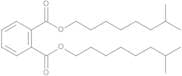
References Boas, M. et al.: Env. Health Persp., 118, 1458 (2010); Petersen, J.H. et al.: Food Add. Contam. Part A Chem. Anal. Cont. Expos. Risk. Assess., 27, 1608 (2010); Kwack, S.J. et al.: Toxicol. Res., 26, 75 (2010);Formula:C26H42O4Color and Shape:Colourless To Light YellowMolecular weight:418.6093Diisononyl Phthalate-13C6,d4
CAS:Controlled ProductFormula:C6C20D4H38O4Color and Shape:NeatMolecular weight:428.59