CAS 2055-12-1
:Pyridine,3-(1-methyl-2-piperidinyl)-
Description:
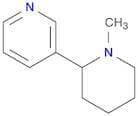
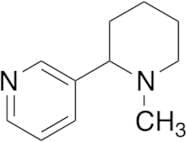
Pyridine, 3-(1-methyl-2-piperidinyl)-, also known by its CAS number 2055-12-1, is a heterocyclic organic compound characterized by a pyridine ring substituted with a piperidine moiety. This compound features a nitrogen atom in both the pyridine and piperidine structures, contributing to its basicity and potential for forming hydrogen bonds. It typically appears as a colorless to pale yellow liquid with a distinctive odor. The presence of the piperidine group enhances its solubility in polar solvents, while the pyridine ring provides aromatic stability. Pyridine derivatives are often utilized in various chemical syntheses and as intermediates in the production of pharmaceuticals, agrochemicals, and dyes. The compound may exhibit biological activity, making it of interest in medicinal chemistry. Safety considerations include its potential toxicity and irritant properties, necessitating appropriate handling and storage measures. Overall, this compound exemplifies the diverse chemistry of nitrogen-containing heterocycles and their applications in various fields.
Formula:C11H16N2
Synonyms:- Anabasine,1-methyl-, (?à)-(8CI)
- Pyridine, 3-(1-methyl-2-piperidinyl)-, (?à)-
- (?à)-Methylanabasine
- Nsc 127744
- dl-N-Methylanabasine
Sort by
Purity (%)
0
100
|
0
|
50
|
90
|
95
|
100
Found 4 products.
Pyridine, 3-(1-methyl-2-piperidinyl)-
CAS:Formula:C11H16N2Color and Shape:LiquidMolecular weight:176.2581N-Methyl Anabasine
CAS:Controlled ProductApplications N-Methyl Anabasine (cas# 2055-12-1) is a compound useful in organic synthesis.
Not a dangerous good if item is equal to or less than 1g/ml and there is less than 100g/ml in the packageFormula:C11H16N2Color and Shape:NeatMolecular weight:176.258N-Methyl anabasine
CAS:N-Methyl anabasine is a pyridine alkaloid, which is a naturally occurring chemical compound derived primarily from the tobacco plant and other related species. Its structure is closely related to nicotine and anabasine, and it functions as an agonist at nicotinic acetylcholine receptors, which are part of the nervous system. This mode of action results in effects similar to nicotine, influencing neurotransmission by mimicking the neurotransmitter acetylcholine.
Formula:C11H16N2Purity:Min. 95%Color and Shape:Clear LiquidMolecular weight:176.26 g/mol