CAS 2055397-18-5
:MOZ-IN-3
Description:
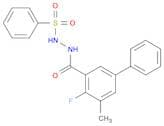
As of my last update in October 2023, "MOZ-IN-3" with the CAS number 2055397-18-5 is a chemical compound that has garnered attention in the field of medicinal chemistry, particularly for its potential applications in drug discovery and development. This compound is characterized by its specific molecular structure, which may include functional groups that contribute to its biological activity. Typically, compounds like MOZ-IN-3 are evaluated for their efficacy in inhibiting certain biological pathways or targets, making them candidates for therapeutic use. The physical properties, such as solubility, stability, and melting point, are also crucial for understanding its behavior in biological systems. Additionally, the compound's safety profile, including toxicity and pharmacokinetics, is essential for assessing its viability as a drug candidate. Research on such compounds often involves extensive in vitro and in vivo studies to elucidate their mechanisms of action and potential side effects. For the most accurate and detailed information, consulting scientific literature or databases specific to chemical substances is recommended.
Formula:C20H17FN2O3S
Synonyms:- KAT6A inhibitor
- KAT6B inhibitor
- WM-8014;WM 8014;WM8014;KAT6A INHIBITOR; KAT6B INHIBITOR
- MOZ-IN-3
- [1,1'-Biphenyl]-3-carboxylic acid, 4-fluoro-5-methyl-, 2-(phenylsulfonyl)hydrazide
- MOZ-IN-3/WM-8014
Sort by
Purity (%)
0
100
|
0
|
50
|
90
|
95
|
100
Found 4 products.
WM-8014
CAS:WM-8014 (MOZ-IN-3) is an inhibitor of MOZ(IC50=55 nM), a member of histone acetyltransferases.Formula:C20H17FN2O3SPurity:99.64%Color and Shape:SolidMolecular weight:384.42Ref: TM-T4362
1mg54.00€2mg78.00€5mg109.00€1mL*10mM (DMSO)129.00€10mg166.00€25mg316.00€50mg470.00€100mg682.00€WM 8014
CAS:Selective and potent inhibitor of lysine acetyltransferases KAT6A and KAT6B with IC50 values of 8 nM and 28 nM, respectively. The compound is a reversible competitor of acetyl coenzyme A domain of KAT6A/B enzymes. It inhibits MYST-catalysed histone acetylation and potentiates senescence in vitro and in zebrafish model of hepatocellular carcinoma. The compound opened the door to a new class of cancer therapeutics that could potentially direct the cancer cells in senescence or permanent dormancy.Formula:C20H17FN2O3SPurity:Min. 95%Color and Shape:PowderMolecular weight:384.43 g/mol