CAS 20556-18-7
:lys-asp
Description:
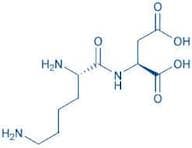
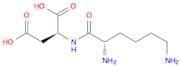
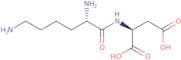
Lys-asp, or lysylaspartic acid, is a dipeptide composed of the amino acids lysine and aspartic acid. It is characterized by its structure, which includes an amino group, a carboxyl group, and a side chain that contributes to its unique properties. Lys-asp is known for its potential biological activities, including roles in protein synthesis and cellular signaling. The presence of the basic lysine residue can impart positive charge under physiological conditions, while the acidic aspartic acid can contribute to negative charge, influencing the peptide's interactions with other biomolecules. This dipeptide is soluble in water and can participate in various biochemical reactions, making it of interest in fields such as biochemistry and pharmacology. Additionally, lys-asp may be studied for its potential applications in drug development and as a component in nutritional supplements. Its CAS number, 20556-18-7, is a unique identifier that facilitates the identification and study of this compound in scientific literature and databases.
Formula:C10H17N3O5
InChI:InChI=1/C10H19N3O5/c11-4-2-1-3-6(12)9(16)13-7(10(17)18)5-8(14)15/h6-7H,1-5,11-12H2,(H,13,16)(H,14,15)(H,17,18)/p-2
SMILES:C(CCN)CC(C(=NC(CC(=O)[O-])C(=O)O)[O-])N
Synonyms:- H-Lys-Asp-OH
Sort by
Purity (%)
0
100
|
0
|
50
|
90
|
95
|
100
Found 3 products.
H-Lys-Asp-OH
CAS:Bachem ID: 4007825.
Formula:C10H19N3O5Purity:> 99%Color and Shape:White PowderMolecular weight:261.28H-Lys-Asp-OH
CAS:H-Lys-Asp-OH is a molecule that binds to the receptor binding molecule for the colony stimulating factor. It has been shown to be effective in protecting against experimental models of hepatic steatosis and monoclonal antibody induced liver injury. The therapeutic potential of H-Lys-Asp-OH is being investigated as a treatment for human hepatic steatosis, which is a condition characterized by high levels of fat in the liver. This drug also has pharmacokinetic properties that are important in its use as an experimental model for studying the effects of antibiotics on bacterial DNA synthesis, and as a diagnostic tool for detecting antibiotic resistant bacteria.Formula:C10H19N3O5Purity:Min. 95%Color and Shape:White PowderMolecular weight:261.28 g/mol