CAS 2058-58-4
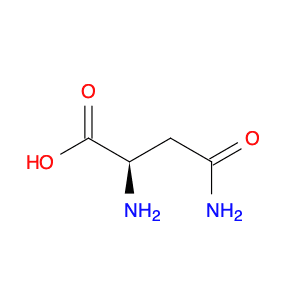
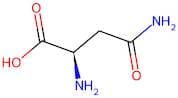
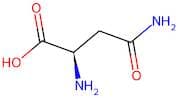
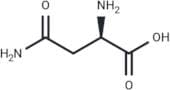
:D-Asparagine
- (2R)-2-Amino-3-carbamoylpropanoic acid
- (2R)-2-aminobutanedioic acid
- (2R)-4-Amino-2-azaniumyl-4-oxobutanoate
- (R)-2,4-Diamino-4-oxobutanoic acid
- <span class="text-smallcaps">D</span>-Asparagine
- Asparagine, <span class="text-smallcaps">D</span>-
- D-2-Aminosuccinamic acid
- D-asparagine anhydrous
- H-D-Asn-OH
- D-Asparagine
- D-asparagine
- See more synonyms
D-Asparagine
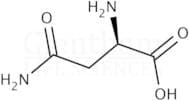
CAS:D-Asparagine (H-D-Asn-OH) is a source of nitrogen for yeast strains. D-Asparagine is a competitive inhibitor of L-Asparagine hydrolysis (Ki = 0.24 mM).Formula:C4H8N2O3Purity:99.83%Color and Shape:White PowderMolecular weight:132.12D-Asparagine, anhydrous
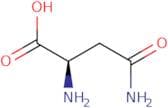
CAS:Formula:C4H8N2O3Purity:99.0 - 101.0 %Color and Shape:White powderMolecular weight:132.12D-Asparagine
CAS:D-Asparagine is a hydroxamic acid that has shown to have antioxidative activity in vitro. D-Asparagine can be used as an analytical method for the determination of fatty acids. It also has been shown to have protective effects on tissue culture cells and human blood samples, which may be due to its antioxidant activity. The deuterium isotope effect is observed when the hydrogen atoms are replaced with deuterium atoms. This change leads to a decrease in the number of protons that are released during metabolism, which can affect cell viability.
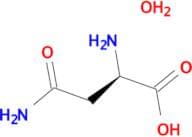
Formula:C4H8N2O3Purity:(Titration) Min. 98%Color and Shape:PowderMolecular weight:132.12 g/molH-D-Asn-OH.H2O
CAS:M03007 - H-D-Asn-OH.H2O
Formula:C4H10N2O4Purity:97%Color and Shape:SolidMolecular weight:150.134D-Asparagine
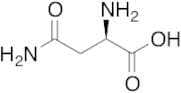
CAS:Controlled ProductApplications D-Asparagine is an isomer of L-Asparagine (A790005) and is used by bacteria (such as Saccharomyces cerevisiae) as a sole nitrogen source for replication. L-Asparagine is also a competitive inhibitor of staphylococcal L-asparaginase and is used as a reagent to synthesize peptide antibiotics.
References Jones, G.: J. Bacteriol., 130, 128 (1977); Perlman, D. & Bodanszey, M.: Ann. Rev. Biochem., 40, 449 (1971); Sobis, M. & Mikucki, J.: Acta Microbiol. Polon., 40, 143 (1990)Formula:C4H8N2O3Color and Shape:NeatMolecular weight:132.12