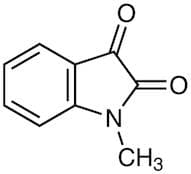
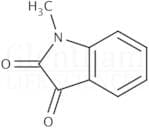
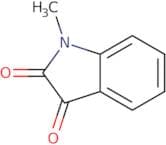
CAS 2058-74-4
:1-Methylisatin
- 1-Methyl-2,3-Dihydroindole-2,3-Dione
- 1-Methyl-2,3-dihydro-1H-indole-2,3-dione
- 1-Methyl-2,3-dioxoindole
- 1-Methyl-2,3-indolinedione
- 1-Methylindole-2,3-dione
- 1-Methylindoline-2,3-Dione
- 1-methyl-1H-indole-2,3-dione
- 1H-Indole-2,3-dione, 1-methyl-
- Indole-2,3-dione, 1-methyl-
- Isatin, 1-methyl-
- Methylisatintech
- N-Methyl-indole-2,3-dione
- N-Methylindoline-2,3-dione
- N-Methylisatin
- N-Methylsatin
- NSC 42449
- Ol 57
- See more synonyms
1-Methylisatin
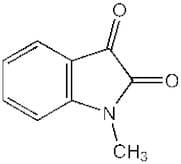
CAS:Formula:C9H7NO2Purity:>98.0%(GC)Color and Shape:Light yellow to Amber to Dark green powder to crystalMolecular weight:161.161-Methylisatin, 97%
CAS:1-Methylisatin is used as a reactant for stereoselective preparation of spirobicyclic and bis-spirotricyclic pyrazolidinones, for regioselective preparation of spirocyclic oxindole-butenolides, for synthesis of spiro-oxindoles, for preparation of unsymmetrical oxindoles, for stereoselective preparatFormula:C9H7NO2Purity:97%Color and Shape:Orange to red, Crystals or powder or crystalline powderMolecular weight:161.161H-Indole-2,3-dione, 1-methyl-
CAS:Formula:C9H7NO2Purity:97%Color and Shape:SolidMolecular weight:161.15741-Methylisatin
CAS:Compound 2058-74-4, with CAS No. 2058-74-4, is a fragment molecule that serves as an important scaffold for molecular linking, expansion, and modification. Compound 2058-74-4 provides a structural basis and research tool for the design and screening of novel drug candidates, and is commonly used in drug discovery, drug synthesis, and related research.Formula:C9H7NO2Purity:99.71%Color and Shape:Orange To Brownish Crystalline PowderMolecular weight:161.161-Methylisatin
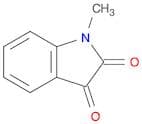
CAS:1-MethylisatinFormula:C9H7NO2Purity:98%Color and Shape:PowderMolecular weight:161.16g/mol1-Methyl-1H-indole-2,3-dione
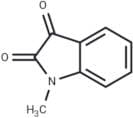
CAS:1-Methyl-1H-indole-2,3-dione is a chemical compound that belongs to the class of indole derivatives. It can be synthesized by reacting 2,3-dihydroxybenzaldehyde with 2,2'-azobis(2-amidinopropane) dihydrochloride and methyl iodide in the presence of copper (II) acetate. This reaction mechanism is similar to that of other reactions involving an intramolecular hydrogen transfer. The binding constants for 1-methyl-1H-indole-2,3-dione are very high and this compound has been shown to inhibit herpes simplex virus replication in vitro. 1MIDD binds to the active site of tryptophan fluorescence and synchronous fluorescence proteins. 1MIDD also binds to copper ions in a coordination geometry that is similar to that found for other compounds containing a carbonyl group.
Formula:C9H7NO2Purity:Min. 95%Color and Shape:PowderMolecular weight:161.16 g/molRef: 3D-FM125542
Discontinued product