CAS 20605-43-0
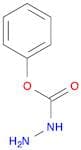
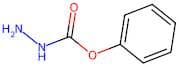
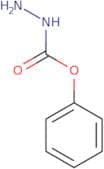
:Hydrazinecarboxylic acid, phenyl ester
Description:
Hydrazinecarboxylic acid, phenyl ester, also known by its CAS number 20605-43-0, is an organic compound characterized by the presence of both hydrazine and carboxylic acid functional groups, with a phenyl ester moiety. This compound typically appears as a colorless to pale yellow liquid or solid, depending on its specific form and purity. It is known for its reactivity, particularly in the presence of oxidizing agents, and can participate in various chemical reactions, including condensation and substitution reactions. The presence of the hydrazine group imparts potential biological activity, making it of interest in medicinal chemistry and agrochemical applications. Additionally, the phenyl ester component can influence its solubility and stability in different solvents. Safety considerations are important when handling this compound, as it may pose health risks, including toxicity and potential irritant effects. Proper storage and handling protocols should be followed to mitigate any hazards associated with its use.
Formula:C7H8N2O2
InChI:InChI=1/C7H8N2O2/c8-9-7(10)11-6-4-2-1-3-5-6/h1-5H,8H2,(H,9,10)
InChI key:InChIKey=DNDTZRSLSJSECH-UHFFFAOYSA-N
SMILES:O(C(NN)=O)C1=CC=CC=C1
Synonyms:- Carbazic acid, phenyl ester
- Hydrazinecarboxylic Acid, Phenyl Ester
- N-(Phenoxycarbonyl)hydrazine
- Phenoxycarboxylic acid hydrazide
- Phenyl Hydrazine-1-Carboxylate
- Phenyl carbazate
- Phenyl hydrazinoformate
- Phenyl hydrazinecarboxylate
- Phenyl hydrazinecarboxylate
- Phenoxyformohydrazide
Sort by
Purity (%)
0
100
|
0
|
50
|
90
|
95
|
100
Found 4 products.
Phenoxyformohydrazide
CAS:Phenoxyformohydrazide
Formula:C7H8N2O2Purity:95%Color and Shape: white solidMolecular weight:152.15g/molPhenyl hydrazinecarboxylate
CAS:Phenyl hydrazinecarboxylate (PHZ) is a chemical compound that is used in the synthesis of other compounds. It can be used as a starting material for the production of amides, which are important in many biochemical reactions. PHZ also has pro-apoptotic properties and can activate adenosine receptors. This chemical has been shown to have strong anti-angiogenic effects and may be useful in the treatment of cardiovascular disorders, growth factor deficiencies, metabolic disorders, and calcium carbonate deposits. PHZ also has nitrogen nucleophilic groups that are involved in catalytic subunit reactions with carbonyl groups or aromatic rings.
Formula:C7H8N2O2Purity:Min. 95%Color and Shape:PowderMolecular weight:152.15 g/mol