CAS 20638-84-0
:Retinamide
Description:
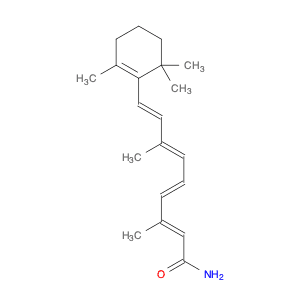
Retinamide, also known as N-retinoyl-β-amino acid, is a derivative of vitamin A (retinol) and is characterized by its role in various biological processes, particularly in vision and cellular growth. It is a pale yellow to orange crystalline solid that is soluble in organic solvents but has limited solubility in water. Retinamide is known for its potential therapeutic applications, particularly in dermatology, where it is used in formulations aimed at treating acne and other skin conditions due to its ability to promote cell turnover and reduce inflammation. The compound exhibits antioxidant properties, which can help protect cells from oxidative stress. Additionally, retinamide is less irritating than other retinoids, making it a favorable option for sensitive skin. Its mechanism of action involves binding to nuclear receptors, influencing gene expression related to skin health and development. Overall, retinamide is a valuable compound in both pharmaceutical and cosmetic industries, contributing to skin health and offering potential benefits in various therapeutic contexts.
Formula:C20H29NO
InChI:InChI=1S/C20H29NO/c1-15(8-6-9-16(2)14-19(21)22)11-12-18-17(3)10-7-13-20(18,4)5/h6,8-9,11-12,14H,7,10,13H2,1-5H3,(H2,21,22)/b9-6+,12-11+,15-8+,16-14+
InChI key:InChIKey=NUXWXMZVAHSICO-YCNIQYBTSA-N
SMILES:C(=C/C(=C/C=C/C(=C/C(N)=O)/C)/C)\C=1C(C)(C)CCCC1C
Synonyms:- Retinal, 15-Amino-
- Retinamide
- Retinamide, all-trans-
- Retinoyl amide
- Ro 4-3930
- all-trans-Vitamin A amide
- trans-Retinylamine
- 15-Aminoretinal
Sort by
Purity (%)
0
100
|
0
|
50
|
90
|
95
|
100
Found 3 products.
Retinamide
CAS:Retinamide is a synthetic retinoid that is used for the treatment of skin cancer. It has been shown to induce apoptosis by activation of the c-jun N-terminal kinase (JNK) and p38 pathways, as well as by suppression of signaling through the phosphatidylinositol 3-kinase (PI3K)/Akt pathway. Retinamide also inhibits proliferation of HL60 cells and induces mitochondrial membrane depolarization in colon carcinoma cells. This drug has been shown to be a potent inhibitor of squamous cell carcinoma growth in vitro and in vivo, especially when combined with other chemotherapeutic agents. Retinamide has also been found to be effective against group P2 carcinomas, which are characterized by mutations in the BRAF gene. Retinamide is metabolized by cytochrome P450 enzymes, leading to reactive metabolites that may cause toxic effects on cells. These metabolites can bind to DNA and cause strand breaksFormula:C20H29NOPurity:Min. 95%Color and Shape:PowderMolecular weight:299.45 g/molRetinamide
CAS:Controlled ProductApplications A Vitamin A derivative; a potent and selective apoptosis-inducing agent. It can be used in the treatment of cancer and other hyperproliferative disorders.
References Formelli, F., et al.: J. Clin. Oncol., 11, 2036 (1993), Fanjul, A., ET AL.: J. Biol. Chem., 271, 22441 (1996), Smith, M., ET AL.: Clin. Cancer Res., 7, 2955 (2001), Um, S., et al.: Cancer Lett., 174, 127 (2001),Formula:C20H29NOColor and Shape:NeatMolecular weight:299.45