CAS 20730-07-8
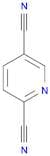
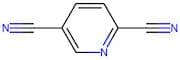
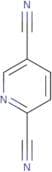
:pyridine-2,5-dicarbonitrile
Description:
Pyridine-2,5-dicarbonitrile, with the CAS number 20730-07-8, is a heterocyclic organic compound characterized by a pyridine ring substituted with two cyano groups at the 2 and 5 positions. This compound typically appears as a colorless to pale yellow solid and is known for its aromatic properties due to the presence of the pyridine ring. Pyridine-2,5-dicarbonitrile is soluble in polar organic solvents, which enhances its utility in various chemical reactions and applications. The cyano groups contribute to its reactivity, making it a valuable intermediate in organic synthesis, particularly in the production of pharmaceuticals, agrochemicals, and other fine chemicals. Additionally, the compound exhibits potential biological activity, which has been the subject of research in medicinal chemistry. Its stability under standard conditions and the ability to undergo various chemical transformations make it a versatile building block in synthetic organic chemistry. Safety precautions should be observed when handling this compound, as it may pose health risks if ingested or inhaled.
Formula:C7H3N3
InChI:InChI=1/C7H3N3/c8-3-6-1-2-7(4-9)10-5-6/h1-2,5H
SMILES:c1cc(C#N)ncc1C#N
Synonyms:- 2,5-Pyridinedicarbonitrile
- Pyridine-2,5-dicarbonitrile
Sort by
Purity (%)
0
100
|
0
|
50
|
90
|
95
|
100
Found 5 products.
2,5-Dicyanopyridine
CAS:2,5-Dicyanopyridine is a ligand that can form coordination complexes with metal ions. It has been shown to form a trimeric structure in nonpolar solvents. 2,5-Dicyanopyridine is also able to act as a substrate for the hydroxy group and cyclopenta ring cleavage of epoxides. The unpaired electron on the nitrogen atom in 2,5-dicyanopyridine makes it an excellent nucleophile in nature. This property may be used to convert feedstock into valuable products such as ammonia or ethylene oxide.
Formula:C7H3N3Purity:Min. 95%Molecular weight:129.12 g/mol