


CAS 207405-68-3
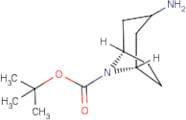
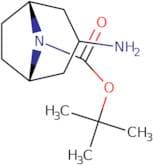
:N-Boc-endo-3-aminotropane
Description:
N-Boc-endo-3-aminotropane is a chemical compound characterized by its bicyclic structure, which includes a tropane ring system. The "N-Boc" designation indicates that the amine group is protected by a tert-butyloxycarbonyl (Boc) group, a common protective group used in organic synthesis to temporarily mask amines. This compound is typically used in medicinal chemistry and organic synthesis due to its potential as a building block for various pharmaceuticals. The endo configuration refers to the specific spatial arrangement of substituents in the bicyclic structure, which can influence the compound's reactivity and interaction with biological targets. N-Boc-endo-3-aminotropane is generally a white to off-white solid and is soluble in organic solvents. Its properties, such as melting point and boiling point, can vary based on purity and specific conditions. As with many chemical substances, handling should be done with care, following appropriate safety protocols due to potential hazards associated with amines and organic solvents.
Formula:C12H22N2O2
Synonyms:- (3-endo)-3-Amino-8-azabicyclo[3.2.1]octane-8-carboxylic acid tert-butyl ester
- Endo-3-Amino-8-Boc-8-Azabicyclo[3.2.1]Octane
Sort by
Purity (%)
0
100
|
0
|
50
|
90
|
95
|
100
Found 4 products.
8-Azabicyclo[3.2.1]octane-8-carboxylic acid, 3-amino-, 1,1-dimethylethyl ester, (3-endo)-
CAS:Formula:C12H22N2O2Purity:98%Color and Shape:SolidMolecular weight:226.3153N-Boc-endo-3-aminotropane
CAS:N-Boc-endo-3-aminotropane is a useful building block for the synthesis of a variety of chemical compounds. It is a versatile intermediate for the synthesis of diverse chemical compounds and is also used in research as a reagent. N-Boc-endo-3-aminotropane has been shown to be highly reactive and to undergo many reactions, including nucleophilic substitution and addition reactions. The compound can be reacted with alkyl halides to form amines, or with nitroalkanes to form oximes. N-Boc-endo-3-aminotropane can also react with anhydrides or acid chlorides to form carboxylic acids, or with sulfonyl chlorides to form sulfonamides. This compound also reacts with thiols or alcohols to form thioethers and ethers respectively.
Formula:C12H22N2O2Purity:Min. 95%Color and Shape:White PowderMolecular weight:226.32 g/mol
![8-Azabicyclo[3.2.1]octane-8-carboxylic acid, 3-amino-, 1,1-dimethylethyl ester, (3-endo)-](/_next/image/?url=https%3A%2Fstatic.cymitquimica.com%2Fproducts%2FIN%2Fthumb%2FDA002J1N.jpg&w=3840&q=75)



![endo-3-amino-8-boc-8-azabicyclo[3.2.1]octane](/_next/image/?url=https%3A%2Fstatic.cymitquimica.com%2Fproducts%2F10%2Fthumb%2FF984668.jpg&w=3840&q=75)
