CAS 20766-36-3
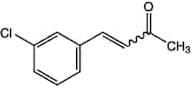
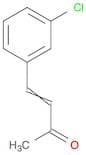
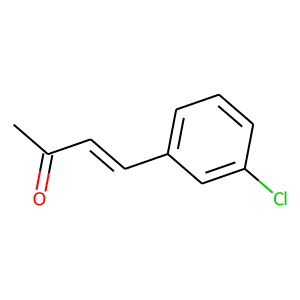
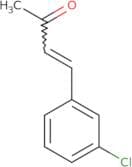
:3-Chlorobenzylideneacetone
- 3-Buten-2-One, 4-(3-Chlorophenyl)-
- 4-(3-Chlorophenyl)but-3-en-2-one
- (3E)-4-(3-chlorophenyl)but-3-en-2-one
3-Chlorobenzylideneacetone, 98%
CAS:This Thermo Scientific Chemicals brand product was originally part of the Alfa Aesar product portfolio. Some documentation and label information may refer to the legacy brand. The original Alfa Aesar product / item code or SKU reference has not changed as a part of the brand transition to Thermo SciFormula:C10H9ClOPurity:98%Color and Shape:Clear yellow to brown, LiquidMolecular weight:180.634-(3-Chlorophenyl)but-3-en-2-one
CAS:4-(3-Chlorophenyl)but-3-en-2-onePurity:≥95%Color and Shape:Low-Melting SolidMolecular weight:180.63g/mol(E)-4-(3-Chloro-phenyl)-but-3-en-2-one
CAS:Formula:C10H9ClOPurity:95.0%Color and Shape:Low Melting SolidMolecular weight:180.63(E)-4-(3-Chloro-phenyl)-but-3-en-2-one
CAS:(E)-4-(3-Chloro-phenyl)-but-3-en-2-one is a pyrazoline compound with a catalytic effect on the polymerization of monomers. It is used in the production of polyurethane foam, plastics, and other materials. It can be produced by reacting phenylhydrazine with 3,5-dichlorophenol. The temperature at which this reaction takes place is between 160°C and 180°C. This compound has been shown to have a degradative effect on the polymerization process and can cause damage to the resin. (E)-4-(3-Chloro-phenyl)-but-3-en-2-one also reacts with peroxide or oxygen at elevated temperatures to produce an unsaturated ketone or an alkene respectively. This compound does not react with dimethylformamide or 4 hydroxycoumarin but it does react with hydrogen chloride to produce chlor
Formula:C10H9ClOPurity:Min. 95%Molecular weight:180.63 g/mol