CAS 207675-84-1
:5-Thiazolecarboxaldehyde,2-(1-methylethyl)-
Description:
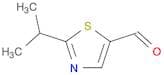
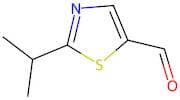
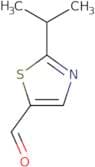
5-Thiazolecarboxaldehyde, 2-(1-methylethyl)- is an organic compound characterized by the presence of a thiazole ring, which is a five-membered heterocyclic structure containing both sulfur and nitrogen atoms. This compound features an aldehyde functional group, which is indicative of its reactivity and potential applications in organic synthesis. The presence of the isopropyl group (1-methylethyl) contributes to its hydrophobic characteristics, influencing its solubility and interaction with other substances. Typically, compounds like this may exhibit biological activity, making them of interest in medicinal chemistry and drug development. The thiazole moiety is often associated with various pharmacological properties, including antimicrobial and antifungal activities. Additionally, the compound's structure suggests potential for further derivatization, which can enhance its chemical properties or biological efficacy. As with many organic compounds, safety data should be consulted to understand its handling and potential hazards in laboratory settings.
Formula:C7H9NOS
Synonyms:- 5-Thiazolecarboxaldehyde, 2-(1-methylethyl)- (9CI)
Sort by
Purity (%)
0
100
|
0
|
50
|
90
|
95
|
100
Found 4 products.
5-Thiazolecarboxaldehyde, 2-(1-methylethyl)- (9CI)
CAS:Formula:C7H9NOSPurity:96%Color and Shape:LiquidMolecular weight:155.21752-Isopropylthiazole-5-carbaldehyde
CAS:2-Isopropylthiazole-5-carbaldehydePurity:96%Molecular weight:155.22g/mol2-(Propan-2-yl)-1,3-thiazole-5-carbaldehyde
CAS:2-(Propan-2-yl)-1,3-thiazole-5-carbaldehyde is a quinazolinone molecule that inhibits the synthesis of pyocyanin in Pseudomonas aeruginosa. It has been shown to be bactericidal and to have a high potency against lung cells. 2-(Propan-2-yl)-1,3-thiazole-5-carbaldehyde is also active against other Gram negative bacteria such as Escherichia coli and Salmonella enterica serovar Typhi, but not against Gram positive bacteria such as Staphylococcus aureus or Bacillus subtilis. This compound attenuates the virulence of P. aeruginosa by interfering with its virulence determinants.Formula:C7H9NOSPurity:Min. 95%Molecular weight:155.22 g/mol