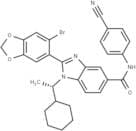
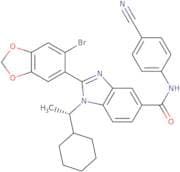
CAS 2100284-59-9
:AZ3451
Description:
As of my last update in October 2023, there is no widely recognized chemical substance known as "AZ3451" with the CAS number "2100284-59-9" in the scientific literature or chemical databases. It is possible that this compound is a proprietary or experimental substance not yet documented in public resources. Typically, chemical substances are characterized by their molecular structure, physical properties (such as melting point, boiling point, and solubility), chemical reactivity, and potential applications. If AZ3451 is a novel compound, details regarding its synthesis, biological activity, or industrial use may be available through specific research publications or patents. For accurate and detailed information, consulting specialized databases or scientific literature would be necessary. If you have access to proprietary databases or specific research articles, they may provide insights into the characteristics and applications of this compound.
Sort by
Purity (%)
0
100
|
0
|
50
|
90
|
95
|
100
Found 5 products.
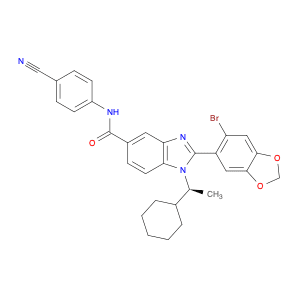
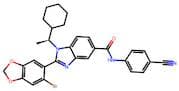
2-(6-Bromo-1,3-benzodioxol-5-yl)-N-(4-cyanophenyl)-1-[(1S)-1-cyclohexylethyl]benzimidazole-5-carboxamide
CAS:2-(6-Bromo-1,3-benzodioxol-5-yl)-N-(4-cyanophenyl)-1-[(1S)-1-cyclohexylethyl]benzimidazole-5-carboxamidePurity:98%Molecular weight:571.46g/molAZ3451
CAS:AZ3451 is an allosteric antagonist of protease-activated receptor-2 (PAR2, IC50: 23 nM).Formula:C30H27BrN4O3Purity:98.12%Color and Shape:SolidMolecular weight:571.46AZ 3451
CAS:AZ 3451 is a small molecule that inhibits the activity of pro-inflammatory cytokines, such as IL-1β and IL-6, by binding to the receptors for these cytokines. AZ 3451 has shown anti-inflammatory effects in an animal model of inflammatory bowel disease and other experimental models of inflammation. It has also been shown to inhibit the production of pro-inflammatory cytokines in activated human monocytes. AZ 3451 is not toxic to healthy cells and has a safety profile similar to placebo. The drug also binds to receptors involved in cellular autophagy, allowing it to be used as a diagnostic marker for inflammatory diseases. The drug's ability to bind with high affinity and specificity makes it useful for structural analysis studies on the receptor complex.Formula:C30H27BrN4O3Purity:Min. 95%Molecular weight:571.46 g/mol


![2-(6-Bromo-1,3-benzodioxol-5-yl)-N-(4-cyanophenyl)-1-[(1S)-1-cyclohexylethyl]benzimidazole-5-carbo…](/_next/image/?url=https%3A%2Fstatic.cymitquimica.com%2Fproducts%2F54%2Fthumb%2FBISN0058.jpg&w=3840&q=75)