![2-[bis(2-chloroethyl)amino]ethyl N-acridin-9-yl-beta-alaninate dihydrochloride](/_next/image/?url=https%3A%2Fstatic.cymitquimica.com%2Fcas-image%2Fthumb-webp%2F1121095-2-bis-2-chloroethyl-amino-ethyl-n-acridin-9-yl-beta-alaninate-dihydrochloride.webp&w=3840&q=75)
CAS 210584-54-6
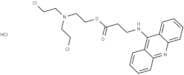
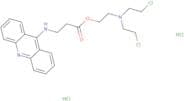
:2-[bis(2-chloroethyl)amino]ethyl N-acridin-9-yl-beta-alaninate dihydrochloride
Description:
2-[Bis(2-chloroethyl)amino]ethyl N-acridin-9-yl-beta-alaninate dihydrochloride is a chemical compound characterized by its complex structure, which includes an acridine moiety and a beta-alanine derivative. This compound is notable for its potential applications in medicinal chemistry, particularly in the development of anticancer agents due to the presence of the bis(2-chloroethyl)amino group, which is known for its alkylating properties. The dihydrochloride form indicates that the compound is a salt, enhancing its solubility in aqueous solutions, which is beneficial for biological studies. Its molecular structure suggests that it may interact with DNA, potentially leading to cytotoxic effects in rapidly dividing cells. The presence of the acridine ring contributes to its ability to intercalate into DNA, further influencing its biological activity. Overall, this compound exemplifies the intersection of organic chemistry and pharmacology, highlighting the importance of structural features in determining the therapeutic potential of chemical entities.
Formula:C22H27Cl4N3O2
InChI:InChI=1/C22H25Cl2N3O2.2ClH/c23-10-13-27(14-11-24)15-16-29-21(28)9-12-25-22-17-5-1-3-7-19(17)26-20-8-4-2-6-18(20)22;;/h1-8H,9-16H2,(H,25,26);2*1H
Sort by
Purity (%)
0
100
|
0
|
50
|
90
|
95
|
100
Found 2 products.
Amustaline dihydrochloride
CAS:Amustaline (S-303) dihydrochloride is a nucleic acid alkylator useful for inactivating pathogens in blood with red cells.Formula:C22H26Cl3N3O2Color and Shape:SolidMolecular weight:470.82Amustaline dihydrochloride
CAS:Amustaline dihydrochloride is a chemical compound known for its alkylating properties, which is synthetically derived through chemical synthesis methods. The mode of action of Amustaline dihydrochloride involves the formation of covalent bonds with nucleophilic entities in DNA, leading to cross-linking and subsequent disruption of DNA function. This results in the inhibition of cellular replication, ultimately inducing apoptosis or programmed cell death in rapidly dividing cells.Formula:C22H27Cl4N3O2Purity:Min. 95%Molecular weight:507.3 g/mol