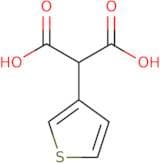
CAS 21080-92-2
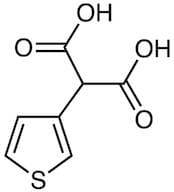
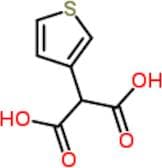
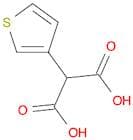
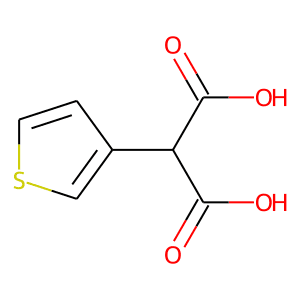
:3-Thiophenemalonic acid
- (3-Thienyl)malonic acid
- 2-(3-Thienyl)malonic acid
- 2-(3-Thienyl)propanedioic acid
- 2-(Thiophen-3-yl)malonic acid
- 2-(Thiophen-3-yl)propanedioic acid
- 2-Thiophen-3-ylpropanedioic acid
- 3-Thienylmalonic acid
- 3-Thienylpropanedioic acid
- Propanedioic acid, 2-(3-thienyl)-
- Propanedioic acid, 3-thienyl-
- Thiophen-3-Ylpropanedioate
- Thiophen-3-Ylpropanedioic Acid
- 3-Thiophenemalonic acid
- 3-thienylpropanedioic acid (intermediate of ticarcillin & temocillin)
- The key intermediate of Ticarcillin & Temocillin
- α-Carboxythiophene-3-acetic acid, (3-Thienyl)malonic acid
- 3-Thiophenemalonic acids
- 3-ThienylpropanedioicAcid(3-Tma)C7H6O4S
- 3-TMA
- 3-thienyl-propanedioicaci
- 3-THIENYLPROPANEDIOIC ACID (3-TMA)
- THIOPHENE-3-MALONIC ACID
- 3-Thiophenemalonic acid, 98+ %
- 3-Thienylpropanedioic
- Thiophen-3-malonic acid
- (Thien-3-yl)propanedioic acid
- LABOTEST-BB LT00112328
- See more synonyms
3-Thiophenemalonic Acid
CAS:Formula:C7H6O4SPurity:>98.0%(T)(HPLC)Color and Shape:White to Orange to Green powder to crystalMolecular weight:186.18Ticarcillin impurity C
CAS:Ticarcillin impurity CFormula:C7H6O4SColor and Shape:Off-WhiteMolecular weight:186.1851Propanedioic acid, 2-(3-thienyl)-
CAS:Formula:C7H6O4SPurity:96%Color and Shape:SolidMolecular weight:186.18512-(Thiophen-3-yl)malonic acid
CAS:Formula:C7H6O4SPurity:95%Color and Shape:Very pale yellow – Pale yellow powderMolecular weight:186.183-Thienylmalonic acid
CAS:3-Thienylmalonic acid is a template molecule that is used in kinetic studies of receptor binding reactions. It is a white solid with a molecular weight of 170.07 g/mol and an empirical formula of CHOS. 3-Thienylmalonic acid has been shown to be effective for corrosion inhibition, as it reacts with chloride ions to form a complex that does not allow the metal surface to corrode. This process can be done in a pH range from 1 to 14 and the reaction solution is colorless, odorless, and stable at room temperature. 3-Thienylmalonic acid also has photocatalytic activity, which allows it to degrade organic molecules such as malonic acid or human serum proteins. The compound can also be used as an electrochemical impedance spectroscopy (EIS) probe for wastewater treatment or chloride solutions.
Purity:Min. 95%Ref: 3D-FT03095
Discontinued product