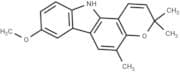
CAS 21087-98-9
:Koenimbine
Description:
Koenimbine, with the CAS number 21087-98-9, is an alkaloid derived from the plant species of the genus *Rauvolfia*, which is known for its medicinal properties. This compound is characterized by its complex indole structure, which is typical of many alkaloids. Koenimbine exhibits various biological activities, including potential antihypertensive and sedative effects, making it of interest in pharmacological research. Its mechanism of action is thought to involve interactions with neurotransmitter systems, particularly those related to serotonin and adrenergic receptors. The substance is typically studied for its potential therapeutic applications, although detailed studies on its pharmacokinetics and toxicity are essential for understanding its safety profile. As with many natural products, the extraction and purification processes can influence its availability and efficacy. Overall, koenimbine represents a fascinating area of study within natural product chemistry and pharmacology, highlighting the importance of plant-derived compounds in drug discovery.
Formula:C19H19NO2
InChI:InChI=1S/C19H19NO2/c1-11-9-15-14-10-12(21-4)5-6-16(14)20-17(15)13-7-8-19(2,3)22-18(11)13/h5-10,20H,1-4H3
InChI key:InChIKey=OSERHKINMDLESD-UHFFFAOYSA-N
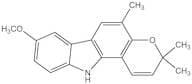
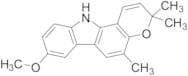
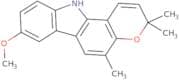
SMILES:CC=1C=C2C(=C3C1OC(C)(C)C=C3)NC=4C2=CC(OC)=CC4
Synonyms:- 3,11-Dihydro-8-methoxy-3,3,5-trimethylpyrano(3,2-a)carbazole
- Kenimbine
- Koenimbin
- Koenimbine
- Mk293
- NSC 127152
- Pyrano(3,2-a)carbazole, 3,11-dihydro-8-methoxy-3,3,5-trimethyl-
Sort by
Purity (%)
0
100
|
0
|
50
|
90
|
95
|
100
Found 4 products.
Koenimbine
CAS:Koenimbine is a natural product for research related to life sciences. The catalog number is TN6155 and the CAS number is 21087-98-9.Formula:C19H19NO2Purity:98%Color and Shape:SolidMolecular weight:293.36Koenimbine
CAS:Natural alkaloidFormula:C19H19NO2Purity:≥ 95.0 % (HPLC)Color and Shape:PowderMolecular weight:293.37Koenimbine
CAS:Koenimbine is a bioactive alkaloid compound, which is primarily derived from the plant Murraya koenigii, commonly known as the curry leaf tree. This compound is believed to exert its effects through the modulation of various biochemical and molecular pathways, including antioxidant, anti-inflammatory, and anti-tumor activities. Its mode of action is linked to the inhibition of certain signaling pathways and the modulation of enzymatic functions, which influence cellular homeostasis and stress responses.Formula:C19H19NO2Purity:Min. 95%Molecular weight:293.4 g/mol