CAS 21138-24-9
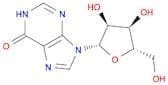
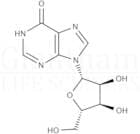
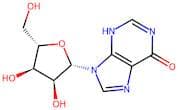
:L-Inosine
Description:
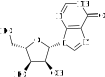
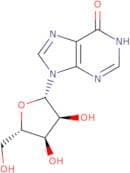
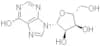
L-Inosine is a purine nucleoside that plays a crucial role in various biological processes. It consists of a hypoxanthine base linked to a ribose sugar. This compound is involved in the metabolism of nucleotides and is a key intermediate in the synthesis of adenosine triphosphate (ATP), which is essential for energy transfer in cells. L-Inosine is known for its potential therapeutic effects, including its use as a supplement to enhance athletic performance and support recovery from certain medical conditions. It exhibits antioxidant properties and may have neuroprotective effects, making it of interest in research related to neurodegenerative diseases. L-Inosine is soluble in water and has a relatively low molecular weight, which facilitates its absorption and utilization in biological systems. Its CAS number, 21138-24-9, is a unique identifier that helps in the cataloging and regulation of this compound in scientific literature and databases. Overall, L-Inosine is a significant molecule in biochemistry with various implications in health and disease.
Formula:C10H12N4O5
Synonyms:- 1,9-Dihydro-9-beta-L-ribofuranosyl-6H-purin-6-one
Sort by
Purity (%)
0
100
|
0
|
50
|
90
|
95
|
100
Found 8 products.
6H-Purin-6-one, 1,9-dihydro-9-β-L-ribofuranosyl-
CAS:Formula:C10H12N4O5Purity:98%Color and Shape:SolidMolecular weight:268.2261L-Inosine
CAS:L-Inosine, an endogenous purine nucleoside from adenosine metabolism, has anti-inflammatory, antinociceptive, immunomodulatory, and neuroprotective properties.Formula:C10H12N4O5Color and Shape:SolidMolecular weight:268.23L-Inosine
CAS:L-Inosine is a purine nucleoside that is found in plants and animals. It is an intermediate in the pentose phosphate pathway and can be synthesized from the amino acid L-lysine. L-Inosine has been shown to inhibit the growth of trichomonas vaginalis and giardia, but not uninfected human erythrocytes. The mechanism of action of L-Inosine is not well understood, but it may have a role in transporting adenosine into cells. The oral bioavailability of L-Inosine is low due to its rapid conversion to l-adenosine by nonsaturable enzymes. L-Inosine does not appear to be a substrate for transport across mammalian cells, but it does act as a competitive inhibitor for glucose transport.Formula:C10H12N4O5Purity:Min. 95%Color and Shape:Off-White SolidMolecular weight:268.23 g/mol