CAS 21141-31-1
:oxamic acid potassium
Description:
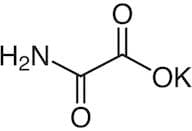
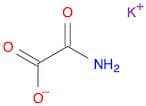
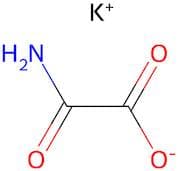
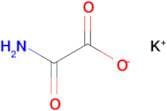
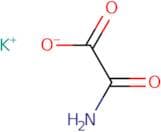
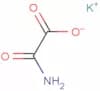
Oxamic acid potassium, with the CAS number 21141-31-1, is a potassium salt derived from oxamic acid, which is an amide of oxalic acid. This compound typically appears as a white crystalline solid and is soluble in water, making it useful in various applications. Its chemical structure features a carboxamide group, which contributes to its reactivity and potential as a ligand in coordination chemistry. Oxamic acid potassium is often studied for its role in biochemical processes and may exhibit properties such as acting as a buffering agent or a precursor in organic synthesis. Additionally, it may have applications in agriculture as a fertilizer or in pharmaceuticals due to its potential biological activity. Safety data should be consulted to understand its handling and toxicity, as with any chemical substance. Overall, oxamic acid potassium is a versatile compound with various implications in both industrial and research settings.
Formula:C2H2KNO3
InChI:InChI=1/C2H3NO3.K/c3-1(4)2(5)6;/h(H2,3,4)(H,5,6);/q;+1/p-1
SMILES:C(=O)(C(=O)O)N.K
Synonyms:- Acetic acid, aminooxo-, monopotassium salt
- Potassium oxamate
- Potassium Amino(Oxo)Acetate
Sort by
Purity (%)
0
100
|
0
|
50
|
90
|
95
|
100
Found 5 products.
Oxamic Acid Potassium Salt
CAS:Formula:C2H2KNO3Purity:>98.0%(T)(N)Color and Shape:White to Almost white powder to crystalMolecular weight:127.14Acetic acid, 2-amino-2-oxo-, potassium salt (1:1)
CAS:Formula:C2H2KNO3Purity:98%Color and Shape:SolidMolecular weight:127.1405Potassium 2-amino-2-oxoacetate
CAS:Potassium 2-amino-2-oxoacetatePurity:98%Molecular weight:127.14g/molOxamic acid potassium
CAS:Oxamic acid is a non-proteinogenic amino acid that is an intermediate in the metabolism of piperidine. Oxamic acid potassium salt (OXAM) is a prodrug that can be converted to oxamic acid by dehydrogenase enzymes. OXAM has been shown to be effective in inhibiting the enzymatic reaction in animals, but it may also have a treatment effect on some types of cancer. OXAM's effects on cancer cells are due to its ability to inhibit the conversion of pyruvate into lactate and other metabolic products by blocking the enzyme activity of lactate dehydrogenase and malic enzyme. This leads to an accumulation of NADH and ATP, which are used for cellular proliferation and energy production. The use of OXAM as a diagnostic agent has been shown in animal experiments where it was used to detect high concentrations of piperidinium, urea nitrogen, or both. In these experiments, OXAM was found to react withFormula:C2H3NO3•KPurity:Min. 95%Color and Shape:PowderMolecular weight:128.15 g/mol