CAS 2120-70-9
:Phenoxyacetaldehyde
Description:
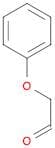
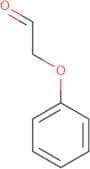
Phenoxyacetaldehyde, with the CAS number 2120-70-9, is an organic compound characterized by the presence of both an aldehyde and an ether functional group. It features a phenoxy group (a phenyl ring bonded to an oxygen atom) attached to an acetaldehyde moiety. This compound typically appears as a colorless to pale yellow liquid with a distinctive aromatic odor. It is soluble in organic solvents and exhibits moderate solubility in water. Phenoxyacetaldehyde is known for its reactivity due to the aldehyde functional group, which can participate in various chemical reactions, including condensation and oxidation. It is used in the synthesis of various organic compounds and may serve as an intermediate in the production of fragrances and pharmaceuticals. Safety considerations include potential irritant effects on the skin and eyes, necessitating appropriate handling precautions. Overall, phenoxyacetaldehyde is a versatile compound with applications in both industrial and research settings.
Formula:C8H8O2
InChI:InChI=1S/C8H8O2/c9-6-7-10-8-4-2-1-3-5-8/h1-6H,7H2
InChI key:InChIKey=XFFILAFLGDUMBF-UHFFFAOYSA-N
SMILES:O(CC=O)C1=CC=CC=C1
Synonyms:- 2-Phenoxyacetaldehyde
- 2-Phenoxyethanal
- Acetaldehyde, 2-phenoxy-
- Acetaldehyde, phenoxy-
- Brn 0970857
- Cortex aldehyde
- Nsc 49355
- Phenoxyacetaldehyde
- 3-06-00-00588 (Beilstein Handbook Reference)
- Phenoxyacetaldehyde
Sort by
Purity (%)
0
100
|
0
|
50
|
90
|
95
|
100
Found 3 products.
2-Phenoxyacetaldehyde
CAS:Formula:C8H8O2Purity:95%Color and Shape:Liquid, No data available.Molecular weight:136.152-Phenoxyacetaldehyde
CAS:2-Phenoxyacetaldehyde is a reactive molecule that has been shown to inhibit the growth of hematopoietic cells. It also inhibits the production of active enzymes, such as amylase, by interfering with the nucleophilic attack and oxidation of 2-phenoxyacetaldehyde. The synthesis methods for 2-phenoxyacetaldehyde include homogeneous catalysts and chemical reactions. This molecule has been used in detergent compositions, but it is not suitable for use in food contact materials because of its toxicity.Formula:C8H8O2Purity:Min. 95%Molecular weight:136.15 g/mol