CAS 21282-10-0
:5-Oxo-L-prolyl-L-valine
Description:
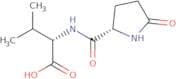
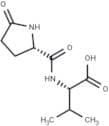
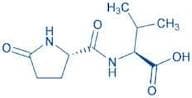
5-Oxo-L-prolyl-L-valine, with the CAS number 21282-10-0, is a dipeptide derivative that features a unique combination of amino acid residues. This compound consists of a proline and valine moiety, with a keto group at the fifth position of the proline side chain, which influences its chemical properties and biological activity. It is typically characterized by its relatively low solubility in water, which is common for peptides with hydrophobic amino acids like valine. The presence of the oxo group can enhance its reactivity, potentially allowing for interactions with various biological targets. This compound may exhibit specific biological activities, including potential roles in peptide synthesis or as a signaling molecule in biological systems. Its structural features may also contribute to its stability and reactivity under physiological conditions. As with many peptides, its synthesis can be achieved through standard peptide coupling methods, and it may be of interest in research related to drug development or biochemical studies.
Formula:C10H16N2O4
InChI:InChI=1S/C10H16N2O4/c1-5(2)8(10(15)16)12-9(14)6-3-4-7(13)11-6/h5-6,8H,3-4H2,1-2H3,(H,11,13)(H,12,14)(H,15,16)/t6-,8-/m0/s1
InChI key:InChIKey=DTSWLLBBGHRXQH-XPUUQOCRSA-N
SMILES:C(N[C@@H](C(C)C)C(O)=O)(=O)[C@H]1NC(=O)CC1
Synonyms:- 5-Oxo-L-prolyl-L-valine
- Valine, N-(5-oxo-L-prolyl)-
- L-Valine, N-(5-oxo-L-prolyl)-
- Valine, N-(5-oxo-L-prolyl)-, L-
- L-Valine, 5-oxo-L-prolyl-
Sort by
Purity (%)
0
100
|
0
|
50
|
90
|
95
|
100
Found 3 products.
Pyr-Val-OH
CAS:Pyr-Val-OH is a molecule that is catalysed by the enzyme histone deacetylase. Pyr-Val-OH has been shown to inhibit cancer cell proliferation and growth. Pyr-Val-OH also has been shown to reduce bacterial vaginosis in mice with bacterial vaginosis, as well as nephrology dialysis patients. Pyr-Val-OH is a diagnostic marker for cancer, bacterial vaginosis and nephrology dialysis patients. It can be used to diagnose these conditions by profiling specific metabolic profiles. This molecule may also be used in the diagnosis of bladder cancer, as it reacts with amp-activated protein, which is elevated in bladder cancer patients.Formula:C10H16N2O4Purity:Min. 95%Color and Shape:PowderMolecular weight:228.25 g/molPyroglutamylvaline
CAS:Pyroglutamylvaline is a dipeptide.Formula:C10H16N2O4Color and Shape:SolidMolecular weight:228.24Pyr-Val-OH
CAS:Substrate for pyroglutamyl peptidase I.
Formula:C10H16N2O4Purity:> 99%Color and Shape:White PowderMolecular weight:228.25