CAS 2138-48-9
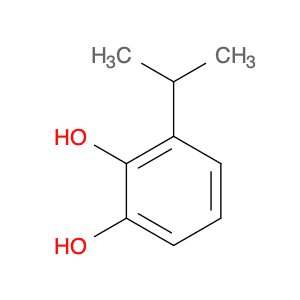
:3-(1-Methylethyl)-1,2-benzenediol
Description:
3-(1-Methylethyl)-1,2-benzenediol, commonly known as 2,6-Di-tert-butyl-4-methylphenol (DTBMP), is an organic compound characterized by its phenolic structure. It features a benzene ring substituted with two tert-butyl groups and a hydroxyl group, which contributes to its antioxidant properties. This compound is typically a white to pale yellow solid at room temperature and is soluble in organic solvents. DTBMP is primarily used as a stabilizer in various industrial applications, including plastics, rubber, and fuels, due to its ability to inhibit oxidative degradation. Its molecular structure allows it to effectively scavenge free radicals, making it valuable in prolonging the shelf life of materials. Additionally, it exhibits low toxicity, which makes it suitable for use in consumer products. However, as with many chemical substances, proper handling and safety measures should be observed to mitigate any potential risks associated with exposure.
Formula:C9H12O2
InChI:InChI=1S/C9H12O2/c1-6(2)7-4-3-5-8(10)9(7)11/h3-6,10-11H,1-2H3
InChI key:InChIKey=XLZHGKDRKSKCAU-UHFFFAOYSA-N
SMILES:C(C)(C)C1=C(O)C(O)=CC=C1
Synonyms:- 1,2-Benzendiol, (1-methylethyl)-
- 1,2-Benzenediol, 3-(1-Methylethyl)-
- 1,2-Dihydroxy-3-isopropylbenzene
- 218-385-0
- 3-(1-Methylethyl)-1,2-benzenediol
- 3-Isopropyl-1,2-dihydroxybenzene
- 3-Isopropylbenzene-1,2-diol
- 3-Isopropylcatechol
- 3-Isopropylpyrocatechol
- 3-Propan-2-ylbenzene-1,2-diol
- Isopropyl catechol
- NSC 62675
- See more synonyms
Sort by
Purity (%)
0
100
|
0
|
50
|
90
|
95
|
100
Found 5 products.
3-Isopropylbenzene-1,2-diol
CAS:Formula:C9H12O2Purity:97%Color and Shape:SolidMolecular weight:152.19043-Isopropylcatechol
CAS:3-Isopropylcatechol is a chemical compound that belongs to the group of catechols. It is a subunit of the catecholamine neurotransmitters dopamine, norepinephrine, and epinephrine. 3-Isopropylcatechol is oxidized to form 3-hydroxycatechol and 3,4-dihydroxybenzoic acid by hydroxy groups in the presence of oxygen. The oxidation products can be used as carbon sources for growth by bacteria. The bacterium Escherichia coli expresses 3-isopropylcatechol from its DNA sequences, which is then converted into extradiol (a precursor) and then into the final product. Escherichia coli requires an organic solvent such as methanol or ethanol to grow on this substrate.Formula:C9H12O2Purity:Min. 95%Color and Shape:PowderMolecular weight:152.19 g/mol3-Isopropylcatechol
CAS:Controlled ProductApplications 3-Isopropylcatechol is an intermediate formed in the synthesis of Miltirone (M344500), an active component in Salvia miltiorrhiza that has been shown to inhibit the increase in the abundance of the mRNA for the α4 subunit of the GABAA receptor induced by ethanol withdrawal in cultured hippocampal neurons. A potential phytotherapeutic agent in the treatment of alcohol dependence.
References Mostallino, M. et al.: Eur. J. Pharmacol., 494, 83 (2004); Abenavoli, L. et al.: Rec. Prog. Med. Plants, 29, 19 (2010); Colombo, G. et al.: Alcohol. Clin. Exp. Res., 30, 754 (2006)Formula:C9H12O2Color and Shape:NeatMolecular weight:152.19