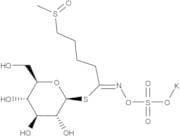
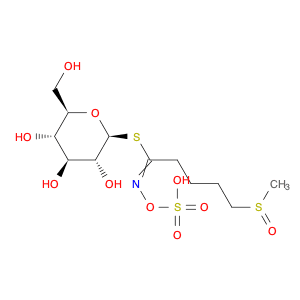
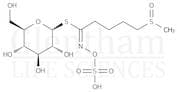
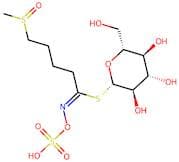
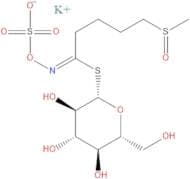
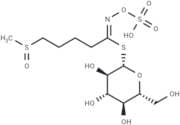
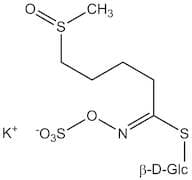
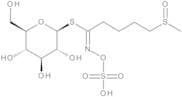
CAS 21414-41-5
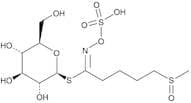
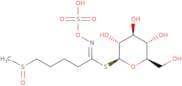
:Glucoraphanin
- 1-S-[(1E)-5-(methylsulfinyl)-N-(sulfonatooxy)pentanimidoyl]-1-thio-beta-D-glucopyranose
- 4-Methylsulfinylbutyl glucosinolate
- Ccris 9055
- Glucopyranose, 1-thio-, 1-[5-(methylsulfinyl)valerohydroximate] NO-(hydrogen sulfate), β-<span class="text-smallcaps">D</span>-
- Glucorafanin
- Sulforaphane glucosinolate
- beta-D-Glucopyranose, 1-thio-, 1-(5-(methylsulfinyl)-N-(sulfooxy)pentanimidate)
- β-<span class="text-smallcaps">D</span>-Glucopyranose, 1-thio-, 1-[5-(methylsulfinyl)-N-(sulfooxy)pentanimidate]
- β-D-Glucopyranose, 1-thio-, 1-[5-(methylsulfinyl)-N-(sulfooxy)pentanimidate]
- Glucoraphanin
- Glucopyranose, 1-thio-, 1-[5-(methylsulfinyl)valerohydroximate] NO-(hydrogen sulfate), β-D-
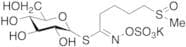
Glucoraphanin potassium salt
CAS:Glucoraphanin potassium salt analytical standard provided with w/w absolute assay, to be used for quantitative titration.Formula:C12H22NO10S3KPurity:(HPLC) ≥98%Color and Shape:PowderMolecular weight:475.59Glucoraphanin
CAS:Formula:C12H22KNO10S3Purity:≥ 98.0%Color and Shape:White to light brown powderMolecular weight:475.58Glucoraphanin
CAS:Glucoraphanin, the bioprecursor of the widely extolled chemopreventive agent sulforaphane found in broccoli, it has antioxidant activity, it induces phase-I xenobiotic metabolizing enzymes and increases free radical generation in rat liver. Glucoraphanin can ameliorates obesity and insulin resistance through adipose tissue browning and reduction of metabolic endotoxemia in mice. Glucoraphanin and Glucoerucin effectively act as antagonists for the aryl hydrocarbon receptor, and this may contribute to their established chemoprevention potency.Formula:C12H23NO10S3Purity:95%~99%Molecular weight:437.51Glucoraphanin
CAS:Glucoraphanin, the precursor of the widely extolled chemopreventive agent sulforaphane found in broccoli, has antioxidant activity.Formula:C12H23NO10S3Purity:98.86% - 99.64%Color and Shape:SolidMolecular weight:437.51Glucoraphanin potassium salt
CAS:Natural glycosideFormula:C12H22NO10S3KPurity:≥ 95.0 % (HPLC)Color and Shape:PowderMolecular weight:475.6Glucoraphanin
CAS:Applications Glucoraphanin is a natural glycoinsolate found in cruciferous vegetables. Glucophanin (Sulforaphane), is a bioactive component in brocolli and is digested by gut bacteria to produce chemopreventive agents.
References Luang-In, V. et al.: Mol. Nutr. Food. Res., 58, 875 (2014); Blazevic, I. et al.: Nat. Prod. Comm., 8, 1463 (2013);Formula:C12H23NO10S3Color and Shape:Off-WhiteMolecular weight:437.51Glucoraphanin Sodium-d5
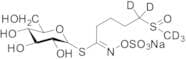
CAS:Controlled ProductApplications Glucoraphanin-d5 is the isotope labelled analog of Glucoraphanin. Glucoraphanin is a natural glycoinsolate found in cruciferous vegetables. Glucophanin (Sulforaphane), is a bioactive component in brocolli and is digested by gut bacteria to produce chemopreventive agents.
References Luang-In, V. et al.: Mol. Nutr. Food. Res., 58, 875 (2014); Blazevic, I. et al.: Nat. Prod. Comm., 8, 1463 (2013);Formula:C12D5H17NNaO10S3Color and Shape:NeatMolecular weight:464.519Glucoraphanin Potassium Salt Reference Standard Grade, 90%
CAS:Formula:C12H22KNO10S3Purity:min. 90%Color and Shape:White to off white, Hygroscopic compoundMolecular weight:475.59Glucoraphanin Potassium Salt (Contains up to ~15% Inorganics)
CAS:Controlled ProductApplications Potassium salt of Glucoraphanin (G450250) is a natural glycoinsolate found in cruciferous vegetables. Glucophanin (Sulforaphane), is a bioactive component in brocolli and is digested by gut bacteria to produce chemopreventive agents.
References Luang-In, V. et al.: Mol. Nutr. Food. Res., 58, 875 (2014); Blazevic, I. et al.: Nat. Prod. Comm., 8, 1463 (2013);Formula:C12H22NO10S3·KColor and Shape:Off-WhiteMolecular weight:475.6Glucoraphanin
CAS:Glucoraphanin is a chemoprotective compound, which is a naturally occurring glucosinolate found predominantly in cruciferous vegetables, with broccoli being a primary source. It undergoes conversion by the enzyme myrosinase to produce sulforaphane, a potent antioxidative agent. This process is facilitated by mastication and microbial action in the gut, leading to activation of pathways that upregulate detoxification enzymes and confer protective effects against oxidative stress.
Formula:C12H23NO10S3Purity:Min. 95%Color and Shape:PowderMolecular weight:437.51 g/molGlucoraphanin
CAS:Glucoraphanin is a bioactive compound, specifically a glucosinolate, which is a secondary metabolite derived from cruciferous vegetables, predominantly broccoli. Its mode of action involves conversion into sulforaphane through the enzyme myrosinase, which can occur during digestion or when the plant tissue is damaged. Sulforaphane then acts as a potent inducer of phase II detoxification enzymes and modulates antioxidant responses via the activation of the Nrf2 (nuclear factor erythroid 2-related factor 2) pathway.
Formula:C12H23NO10S3Purity:Min. 95%Molecular weight:437.51 g/mol