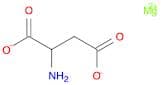
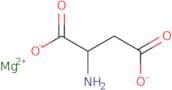
CAS 215528-79-3
:magnesium (2S)-2-aminobutanedioate tetrahydrate
Description:
Magnesium (2S)-2-aminobutanedioate tetrahydrate, with the CAS number 215528-79-3, is a coordination compound that features magnesium ions coordinated to the anionic form of 2-aminobutanedioic acid (also known as L-aspartic acid). This compound typically exists as a tetrahydrate, meaning it incorporates four water molecules in its crystalline structure, which can influence its solubility and stability. The presence of the magnesium ion provides essential mineral properties, making it relevant in biological systems, particularly in enzyme function and metabolic processes. The (2S) designation indicates the specific stereochemistry of the amino acid component, which is crucial for its biological activity. In terms of physical properties, this compound is likely to be a white crystalline solid, soluble in water due to the hydrophilic nature of the amino acid and the hydration shell formed by the water molecules. Its applications may extend to nutritional supplements, agricultural formulations, or as a reagent in biochemical research, reflecting its importance in both health and scientific contexts.
Formula:C4H13MgNO8
InChI:InChI=1/C4H7NO4.Mg.4H2O/c5-2(4(8)9)1-3(6)7;;;;;/h2H,1,5H2,(H,6,7)(H,8,9);;4*1H2/q;+2;;;;/p-2/t2-;;;;;/m0...../s1
Synonyms:- Dl-Aspartic Acid Magnesium Salt Tetrahydrate
Sort by
Purity (%)
0
100
|
0
|
50
|
90
|
95
|
100
Found 3 products.
DL-Aspartic acid magnesium salt tetrahydrate
CAS:Formula:C4H5MgNO4·4H2OPurity:(Titration) 98.0 - 102.0 %Color and Shape:White crystalline powder or crystalsMolecular weight:360.56DL-Aspartic acid magnesium salt
CAS:DL-Aspartic acid magnesium salt is a drug that has been used to treat cardiac infarction. It is a carboxymethyl, colloid, polyvinyl pyrrolidone, and residue of the active substance. The nucleus of the heart muscle cells is an important target for this drug. It binds to the DNA in the nucleus of cardiac muscle cells and prevents the enzyme citrate synthetase from synthesizing ATP, thereby inhibiting cellular respiration. Citrate synthetase is one of two enzymes involved in the synthesis of ATP from citric acid and acetate. Magnesium stearate and magnesium are used as excipients in this product.
Formula:C4H7NO4·2H2OMgPurity:Min. 95%Molecular weight:181.29 g/mol