CAS 2169-28-0
:Benzoic acid,3-hydroxy-2-methoxy-
Description:
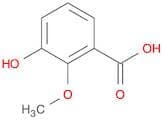
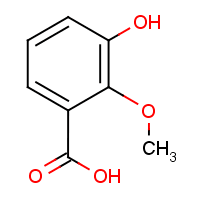
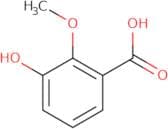
Benzoic acid, 3-hydroxy-2-methoxy- (CAS number 2169-28-0), is an organic compound characterized by its aromatic structure, which features a benzoic acid moiety with hydroxyl and methoxy substituents. This compound typically appears as a white crystalline solid and is soluble in organic solvents, while exhibiting limited solubility in water due to its hydrophobic aromatic ring. The presence of the hydroxyl (-OH) group contributes to its acidity, allowing it to participate in acid-base reactions, while the methoxy (-OCH₃) group can influence its reactivity and polarity. Benzoic acid derivatives, including this compound, are often studied for their potential applications in pharmaceuticals, agrochemicals, and as intermediates in organic synthesis. Additionally, the specific arrangement of functional groups can affect its biological activity, making it of interest in medicinal chemistry. Overall, this compound exemplifies the diverse chemistry of substituted benzoic acids and their relevance in various chemical contexts.
Formula:C8H8O4
Synonyms:- o-Anisicacid, 3-hydroxy- (7CI,8CI)
- 3-Hydroxy-2-methoxybenzoic acid
Sort by
Purity (%)
0
100
|
0
|
50
|
90
|
95
|
100
Found 4 products.
3-Hydroxy-2-methoxybenzoic acid
CAS:3-Hydroxy-2-methoxybenzoic acidPurity:95%Molecular weight:168.15g/mol3-Hydroxy-2-methoxybenzoic acid
CAS:3-Hydroxy-2-methoxybenzoic acid (3HMB) is a phenolic compound that is found in the heartwood of Eucalyptus trees, fruits such as apples and cherries, and some vegetables. 3HMB has been shown to inhibit tumor necrosis factor-α (TNF-α) production by proinflammatory cytokines such as IL-1β and IL-6, which are produced by cells in response to infection or tissue injury. 3HMB also inhibits the activity of tyrosol oxygenase, which converts tyrosol to vanillic acid. Vanillic acid can be converted into vanillin, an important precursor for the synthesis of pigments that give fruits their color. 3HMB has been shown to inhibit the growth of cancer cells in vitro.Formula:C8H8O4Purity:Min. 95%Color and Shape:PowderMolecular weight:168.15 g/mol