CAS 21709-90-0
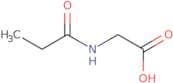
:Propionylglycine
Description:
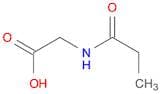
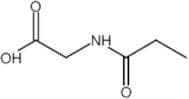
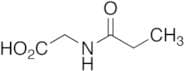
Propionylglycine, with the CAS number 21709-90-0, is an amino acid derivative characterized by its structure, which includes a propionyl group attached to the amino acid glycine. This compound is typically a white to off-white crystalline solid and is soluble in water due to the presence of the amino and carboxyl functional groups. Propionylglycine is known for its role in metabolic processes, particularly in the context of amino acid metabolism and energy production. It may also serve as a biomarker in certain metabolic disorders. The compound is relatively stable under standard conditions but should be handled with care, as with many chemical substances, to avoid degradation or reaction with other compounds. Its applications can extend to research in biochemistry and pharmacology, where it may be studied for its potential therapeutic effects or as a metabolic intermediate. Overall, propionylglycine is an interesting compound with relevance in both biological systems and chemical research.
Formula:C5H9NO3
InChI:InChI=1S/C5H9NO3/c1-2-4(7)6-3-5(8)9/h2-3H2,1H3,(H,6,7)(H,8,9)
InChI key:InChIKey=WOMAZEJKVZLLFE-UHFFFAOYSA-N
SMILES:C(NCC(O)=O)(CC)=O
Synonyms:- (Propionylamino)acetic acid
- (Propionylamino)essigs?ure
- 2-(Propanoylamino)acetic acid
- 2-(Propionamido)acetic acid
- 2-Propanamidoacetic acid
- Acide (propionylamino)acétique
- Ethylformylglycine
- Glycine, N-propionyl-
- N-(1-Oxopropyl)glycine
- N-Propionylglycine
- N-propionyl-Glycine
- NSC 158539
- Propionylglycine
- See more synonyms
Sort by
Purity (%)
0
100
|
0
|
50
|
90
|
95
|
100
Found 10 products.
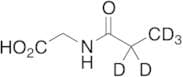
N-Propionyl-d5-glycine
CAS:Formula:CD3CD2CONHCH2COOHPurity:99 atom % DColor and Shape:White SolidMolecular weight:136.08963Propionyl Glycine
CAS:Controlled ProductApplications A metabolite of methylmalonic acid and propionic acid in children with methylmalonic acid and propionic acid metabolic disorders.
References Duran, M., et al.: Clin. Chimica Acta, 82, 93 (1978), Thompson, G.N., et al.: Pediatric Res., 27, 413 (1990),Formula:C5H9NO3Color and Shape:NeatMolecular weight:131.13Propionyl-d5 Glycine
CAS:Controlled ProductApplications Propionyl-d5 Glycine is labelled Propionyl Glycine (P788500), a metabolite of methylmalonic acid and propionic acid in children with methylmalonic acid and propionic acid metabolic disorders.
References Duran, M., et al.: Clin. Chimica Acta, 82, 93 (1978), Thompson, G.N., et al.: Pediatric Res., 27, 413 (1990),Formula:C5D5H4NO3Color and Shape:NeatMolecular weight:136.16N-Propionylglycine-13C2,15N
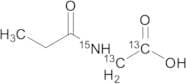
CAS:Controlled ProductFormula:C2C3H915NO3Color and Shape:NeatMolecular weight:134.109Propionyl glycine
CAS:Propionyl glycine is a metabolite of the amino acid L-proline. It is produced by the enzyme propionyl-CoA carboxylase that converts propionate to propionyl glycine. This reaction is important in energy metabolism, as it provides the cell with a source of carbon for fatty acid synthesis. Propionyl glycine can be used in sample preparation procedures for diagnosis of metabolic disorders, such as propionic acidemia and fatty acid oxidation defects. It can also be used to detect dehydroandrograpolide (DHA), a molecule that has been shown to have antidiabetic activity. The detection sensitivity of propionyl glycine is lower than that of other metabolites, such as methylmalonic acid or ethylmalonic acid, which makes it more suitable for use in diagnostic tests where analytical methods are less sensitive.Formula:C5H9NO3Purity:(%) Min. 98%Color and Shape:White PowderMolecular weight:131.13 g/mol