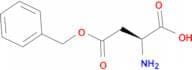
CAS 2177-63-1
:4-(Phenylmethyl) hydrogen L-aspartate
Description:
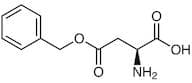
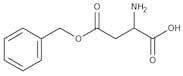
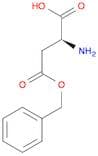
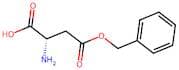
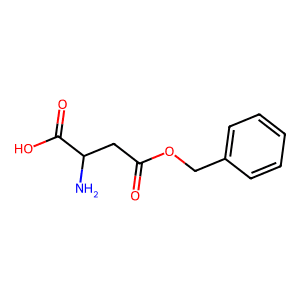
4-(Phenylmethyl) hydrogen L-aspartate, also known by its CAS number 2177-63-1, is an amino acid derivative that features a phenylmethyl group attached to the aspartate backbone. This compound is characterized by its structural complexity, which includes a carboxylic acid functional group and an amine group, typical of amino acids. The presence of the phenylmethyl group contributes to its hydrophobic characteristics, influencing its solubility and interaction with biological systems. This compound is of interest in biochemical research, particularly in studies related to neurotransmission and metabolic pathways, as aspartate plays a crucial role as a neurotransmitter in the central nervous system. Additionally, its derivatives may exhibit potential pharmacological properties, making it a subject of investigation in medicinal chemistry. The stability and reactivity of 4-(Phenylmethyl) hydrogen L-aspartate can be influenced by pH and temperature, which are important factors to consider in experimental applications. Overall, this compound exemplifies the intricate relationship between structure and function in biochemical contexts.
Formula:C11H13NO4
InChI:InChI=1S/C11H13NO4/c12-9(11(14)15)6-10(13)16-7-8-4-2-1-3-5-8/h1-5,9H,6-7,12H2,(H,14,15)/t9-/m0/s1
InChI key:InChIKey=VGALFAWDSNRXJK-VIFPVBQESA-N
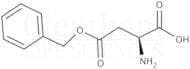
SMILES:C(OC(C[C@@H](C(O)=O)N)=O)C1=CC=CC=C1
Synonyms:- (2S)-2-Amino-4-(benzyloxy)-4-oxobutanoic acid
- (2S)-2-Amino-4-oxo-4-phenylmethoxybutanoic acid
- (2S)-2-amino-3-benzyloxy-3-oxo-propanoic acid
- (2S)-2-amino-4-(benzyloxy)-4-oxobutanoic acid (non-preferred name)
- (3S)-3-ammonio-4-(benzyloxy)-4-oxobutanoate
- 2-Amino-4-(Benzyloxy)-4-Oxobutanoic Acid (Non-Preferred Name)
- 3-Amino-4-(Benzyloxy)-4-Oxobutanoic Acid (Non-Preferred Name)
- 4-(Phenylmethyl) hydrogen <span class="text-smallcaps">L</span>-aspartate
- 4-Benzyl <span class="text-smallcaps">L</span>-aspartate
- <span class="text-smallcaps">L</span>-Aspartic acid 4-O-benzyl ester
- <span class="text-smallcaps">L</span>-Aspartic acid 4-benzyl ester
- <span class="text-smallcaps">L</span>-Aspartic acid β-benzyl ester
- <span class="text-smallcaps">L</span>-Aspartic acid, 4-(phenylmethyl) ester
- Aspartic acid β-benzyl ester
- Aspartic acid, 4-benzyl ester, <span class="text-smallcaps">L</span>-
- Benzyl aspartate
- H-Asp(OBzl)-OH
- H-Asp-OBzl
- L-Aspartic acid b-benzyl ester
- L-Aspartic acid benzyl ester
- NSC 524167
- β-Benzyl <span class="text-smallcaps">L</span>-aspartate
- β-Benzyl aspartate
- Aspartic acid, 4-benzyl ester, L-
- 4-(Phenylmethyl) hydrogen L-aspartate
- L-Aspartic acid, 4-(phenylmethyl) ester
- See more synonyms
Sort by
Purity (%)
0
100
|
0
|
50
|
90
|
95
|
100
Found 10 products.
4-Benzyl L-Aspartate
CAS:Formula:C11H13NO4Purity:>98.0%(T)Color and Shape:White to Almost white powder to crystalMolecular weight:223.23L-Aspartic acid 4-benzyl ester, 98%
CAS:L-Aspartic acid -benzyl ester is used in the synthesis of peptides with a 1,4-diazepine-2,5-dione ring structure and in development of block copolymers. This Thermo Scientific Chemicals brand product was originally part of the Alfa Aesar product portfolio. Some documentation and label information maFormula:C11H13NO4Purity:98%Color and Shape:Powder, WhiteMolecular weight:223.23H-Asp(OBzl)-OH
CAS:Bachem ID: 4000257.
Formula:C11H13NO4Purity:98.6%Color and Shape:WhiteMolecular weight:223.23L-Aspartic acid 4-O-benzyl ester
CAS:Formula:C11H13NO4Purity:98%Color and Shape:SolidMolecular weight:223.2252L-Aspartic Acid 4-Benzyl Ester
CAS:L-Aspartic Acid 4-Benzyl EsterPurity:98%Molecular weight:223.23g/molL-Aspartic Acid 4-Benzyl Ester
CAS:L-Aspartic Acid 4-Benzyl EsterPurity:≥98%Molecular weight:223.23g/molL-Aspartic Acid 4-Benzyl Ester
CAS:L-Aspartic Acid 4-Benzyl Ester chelates metals, studies enzyme activity, and gene regulation.Formula:C11H13NO4Purity:98.69%Color and Shape:White PowderMolecular weight:223.23L-Aspartic acid b-benzyl ester
CAS:L-Aspartic acid b-benzyl ester (L-ABE) is a cytostatic drug that is biodegradable and can be used in a variety of animal species. It has been shown to inhibit the growth of cancer cells in vitro and in vivo, as well as micelles. L-ABE inhibits the action of dehydroascorbic acid reductase, an enzyme that reduces dehydroascorbic acid to ascorbic acid. This inhibition leads to an increase in the concentration of dehydroascorbic acid, which may cause cell death by damaging DNA. L-ABE also has been shown to inhibit P-glycoprotein (Pgp), leading to increased accumulation of anticancer drugs such as doxorubicin, which can lead to cell death.Formula:C11H13NO4Purity:Min. 95%Color and Shape:White PowderMolecular weight:223.23 g/molH-Asp(OBzl)-OH
CAS:M03009 - H-Asp(OBzl)-OH
Formula:C11H13NO4Purity:98%Color and Shape:White powderMolecular weight:223.228