CAS 2182-39-0
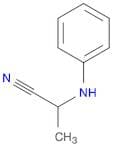
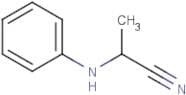
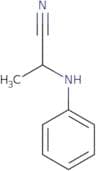
:2-(Phenylamino)propanenitrile
Description:
2-(Phenylamino)propanenitrile, also known by its CAS number 2182-39-0, is an organic compound characterized by the presence of both an amino group and a nitrile group attached to a propyl backbone. This compound features a phenyl group, which is a benzene ring, bonded to the amino group, contributing to its aromatic properties. The nitrile functional group (-C≡N) imparts significant polarity and can influence the compound's reactivity, making it useful in various chemical syntheses. Typically, compounds like 2-(Phenylamino)propanenitrile exhibit moderate solubility in polar solvents due to the presence of the nitrile and amino groups, while their aromatic nature can enhance interactions with other organic molecules. This compound may be of interest in pharmaceutical and materials chemistry due to its potential applications in drug development and as an intermediate in organic synthesis. Safety data should be consulted for handling and storage, as with all chemical substances, to ensure proper precautions are taken.
Formula:C9H10N2
InChI:InChI=1S/C9H10N2/c1-8(7-10)11-9-5-3-2-4-6-9/h2-6,8,11H,1H3
InChI key:InChIKey=OBJMWYAZGBFFNS-UHFFFAOYSA-N
SMILES:N(C(C#N)C)C1=CC=CC=C1
Synonyms:- 2-Anilinopropanenitrile
- Propionitrile, 2-anilino-
- 2-(Phenylamino)propanenitrile
- Propanenitrile, 2-(phenylamino)-
- 2-(Phenylamino)-propionitrile
Sort by
Purity (%)
0
100
|
0
|
50
|
90
|
95
|
100
Found 4 products.
2-(Phenylamino)propanenitrile
CAS:Formula:C9H10N2Purity:95%Color and Shape:SolidMolecular weight:146.18912-(Phenylamino)propanenitrile
CAS:2-(Phenylamino)propanenitrile
Purity:95%Molecular weight:146.19g/mol2-(Phenylamino)propanenitrile
CAS:2-(Phenylamino)propanenitrile is a reactive c6 alkyl with an occlusive phosphate group that has been shown to be bactericidal in concentrations of 10 µg/ml. It is able to penetrate and damage the cell membrane of the bacteria, thereby inhibiting its ability to maintain homeostasis. 2-(Phenylamino)propanenitrile also has the ability to modulate muscle cell proliferation. This compound has been shown to reduce restenosis after angioplasty by reducing inflammation in damaged tissue and limiting the number of inflammatory cells that are recruited into the area.Formula:C9H10N2Purity:Min. 95%Molecular weight:146.19 g/mol