CymitQuimica logo

CAS 21835-35-8

:

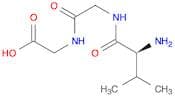
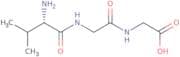
val-gly-gly

Description:
Val-Gly-Gly, also known as Valine-Glycine-Glycine, is a tripeptide composed of three amino acids: valine, glycine, and glycine. It is characterized by its specific sequence, which influences its biochemical properties and biological functions. Val-Gly-Gly is typically classified as a non-polar peptide due to the presence of valine, which has a hydrophobic side chain. This tripeptide can participate in various biological processes, including protein synthesis and cellular signaling. Its structure allows it to potentially interact with other biomolecules, contributing to its role in physiological functions. The CAS number 21835-35-8 uniquely identifies this compound in chemical databases, facilitating its study and application in research and industry. Val-Gly-Gly may also exhibit specific solubility characteristics, stability under certain conditions, and potential bioactivity, making it of interest in fields such as biochemistry, pharmacology, and nutrition. Understanding its properties can aid in the exploration of its applications in therapeutic contexts and peptide synthesis.
Formula:C9H17N3O4
InChI:InChI=1/C9H17N3O4/c1-5(2)8(10)9(16)12-3-6(13)11-4-7(14)15/h5,8H,3-4,10H2,1-2H3,(H,11,13)(H,12,16)(H,14,15)
SMILES:CC(C)C(C(=NCC(=NCC(=O)O)O)O)N
Synonyms:
  • H-Val-Gly-Gly-OH
  • L-Valylglycylglycine
  • Valylglycylglycine
Sort by

Purity (%)
0
100
|
0
|
50
|
90
|
95
|
100
Found 2 products.
  • H-Val-Gly-Gly-OH

    CAS:
    Formula:C9H17N3O4
    Molecular weight:231.2490

    Ref: IN-DA007P2S

    ne
    To inquire
  • Amyloid beta-Protein (36-38)

    CAS:

    Amyloid beta-Protein (36-38) is a peptide that has molecular weight of 4.3 kDa. It is a fragment of amyloid precursor protein, which is cleaved by enzymes in the brain to create the peptide. Amyloid beta-Protein (36-38) has been found to be involved in Alzheimer's disease as it aggregates into β-sheet bundles and forms amyloid plaques in the brain. This protein can be detected using vibrational spectroscopy and has been observed to have a strain that changes depending on pH. This molecule also undergoes proteolysis by peptidases, which break down proteins into amino acids for analysis with an amino acid analyzer. The solute can be analyzed with an acid analysis or spectrometer, which are used to determine functional groups such as carboxylic acids, hydroxyls, or amides. Amyloid beta-Protein (36-38)

    Formula:C9H17N3O4
    Purity:Min. 95%
    Molecular weight:231.25 g/mol

    Ref: 3D-FA109475

    1g
    307.00€
    2g
    502.00€
    5g
    845.00€
    10g
    1,354.00€
    25g
    2,866.00€