CAS 21913-99-5
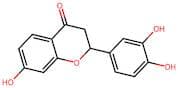
:2-(3,4-Dihydroxyphenyl)-2,3-dihydro-7-hydroxy-4H-1-benzopyran-4-one
Description:
The chemical substance known as 2-(3,4-Dihydroxyphenyl)-2,3-dihydro-7-hydroxy-4H-1-benzopyran-4-one, with the CAS number 21913-99-5, is a flavonoid compound characterized by its complex polyphenolic structure. This compound features a benzopyran core, which is typical of flavonoids, and includes multiple hydroxyl groups that contribute to its antioxidant properties. The presence of the dihydroxyphenyl group enhances its potential for biological activity, including anti-inflammatory and anticancer effects. Its solubility and stability can vary depending on the solvent and environmental conditions, which is important for its application in pharmaceuticals and nutraceuticals. Additionally, the compound may exhibit UV-absorbing properties, making it useful in cosmetic formulations. Overall, its unique structural features and biological activities make it a subject of interest in various fields, including medicinal chemistry and natural product research.
Formula:C15H12O5
InChI:InChI=1S/C15H12O5/c16-9-2-3-10-12(18)7-14(20-15(10)6-9)8-1-4-11(17)13(19)5-8/h1-6,14,16-17,19H,7H2
InChI key:InChIKey=MJBPUQUGJNAPAZ-UHFFFAOYSA-N
SMILES:O=C1C=2C(OC(C1)C3=CC(O)=C(O)C=C3)=CC(O)=CC2
Synonyms:- Flavanone, 3′,4′,7-trihydroxy-
- 2-(3,4-Dihydroxyphenyl)-2,3-dihydro-7-hydroxy-4H-1-benzopyran-4-one
- 3′,4′,7-Trihydroxyflavanone
- 4′,5′,7-Trihydroxyflavanone
- 4H-1-Benzopyran-4-one, 2-(3,4-dihydroxyphenyl)-2,3-dihydro-7-hydroxy-
Sort by
Purity (%)
0
100
|
0
|
50
|
90
|
95
|
100
Found 3 products.
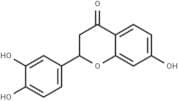
Butin
CAS:Butin,Bioactive flavonoid from Dalbergia odorifera. Antioxidant, antiplatelet, anti-inflammatory. Alleviates myocardial infarction.Formula:C15H12O5Purity:99.91%Color and Shape:SolidMolecular weight:272.253',4',7-Trihydroxyflavanone
CAS:3',4',7-Trihydroxyflavanone is a natural flavonoid compound, which is predominantly found in various plant sources, such as flowers, fruits, and leaves. This compound is known for its significant antioxidative properties, attributed to its polyphenolic structure. The mechanism of action involves the scavenging of free radicals, thereby reducing oxidative stress within biological systems. Additionally, its molecular configuration allows it to interact with various cellular pathways that modulate inflammation and cellular signaling.Formula:C15H12O5Purity:Min. 95%Molecular weight:272.25 g/mol