CAS 219749-76-5
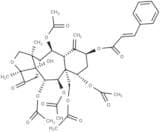
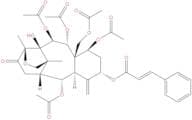
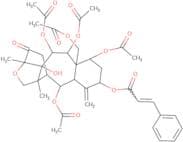
:2-Propenoic acid,3-phenyl-,(1S,3aR,4R,5R,5aR,7S,9S,9aR,10R,11S,11aR)-5,9,10,11-tetrakis(acetyloxy)-9a-[(acetyloxy)methyl]tetradecahydro-11a-hydroxy-1,3a-dimethyl-6-methylene-13-oxo-1,4-ethanobenzo[5,6]cycloocta[1,2-c]furan-7-ylester, (2E)-
Description:
The chemical substance known as 2-Propenoic acid, 3-phenyl-, with the specified stereochemistry and CAS number 219749-76-5, is a complex organic compound characterized by its unique structural features. It contains multiple functional groups, including an acrylic acid moiety and several acetoxy groups, which contribute to its reactivity and potential applications in organic synthesis. The presence of a phenyl group indicates aromatic characteristics, while the tetradecahydro structure suggests a polycyclic framework that may influence its physical properties, such as solubility and melting point. The stereochemistry, indicated by the specific configuration at various chiral centers, is crucial for determining the compound's biological activity and interaction with other molecules. This compound may exhibit interesting pharmacological properties due to its intricate structure, making it a candidate for further research in medicinal chemistry. Overall, its complex arrangement of atoms and functional groups highlights the diversity of organic compounds and their potential utility in various chemical applications.
Formula:C39H46O15
Synonyms:- 19-Acetoxytaxagifin
- 19-Acetoxytaxagifine
- Taxezopidin L
- Taxezopidine L
Sort by
Purity (%)
0
100
|
0
|
50
|
90
|
95
|
100
Found 3 products.
Taxezopidine L
CAS:Taxezopidines K and taxezopidine L can markedly inhibit Ca2+-induced depolymerization of microtubules.Formula:C39H46O15Purity:98%Color and Shape:SolidMolecular weight:754.77Taxezopidine L
CAS:Taxezopidine L is a hypothetical pharmaceutical compound, which is presumably synthesized through advanced organic synthesis techniques, based on its nomenclature. This compound is a result of complex chemical engineering, indicating that it originates from artificially designed small molecules intended for therapeutic purposes. Its mode of action could potentially involve interaction with specific biological targets, such as enzymes or receptors, to modulate physiological pathways in a precise manner, although specific details are required for confirmation.Formula:C39H46O15Purity:Min. 95%Molecular weight:754.8 g/mol