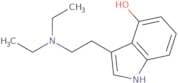
CAS 22204-89-3
:4-Hydroxy-N,N-diethyltryptamine
Description:
4-Hydroxy-N,N-diethyltryptamine, commonly referred to as 4-HO-DET, is a synthetic compound belonging to the tryptamine class of psychedelics. It is structurally related to psilocybin and other tryptamines, featuring a hydroxy group at the 4-position of the indole ring and diethylamine substituents. This compound is known for its psychoactive properties, often producing effects such as altered perception, enhanced emotional experiences, and visual hallucinations. The mechanism of action is primarily through agonism at serotonin receptors, particularly the 5-HT2A receptor. 4-HO-DET is typically encountered in research contexts and is not widely used in clinical settings. Its pharmacological profile suggests potential for exploration in therapeutic applications, although further studies are needed to fully understand its effects and safety profile. As with many psychedelics, the experience can be influenced by dosage, individual psychology, and environmental factors. Caution is advised due to the variability in individual responses and the legal status of such substances in various jurisdictions.
Formula:C14H20N2O
InChI:InChI=1S/C14H20N2O/c1-3-16(4-2)9-8-11-10-15-12-6-5-7-13(17)14(11)12/h5-7,10,15,17H,3-4,8-9H2,1-2H3
InChI key:InChIKey=OHHYMKDBKJPILO-UHFFFAOYSA-N
SMILES:C(CN(CC)CC)C=1C=2C(NC1)=CC=CC2O
Synonyms:- 1H-indol-4-ol, 3-[2-(diethylamino)ethyl]-
- 3-(2-Diethylaminoethyl)indol-4-ol
- 4-Hydroxy-N,N-diethyltryptamine
- Cz 74
- Indol-4-ol, 3-[2-(diethylamino)ethyl]-
- 3-[2-(Diethylamino)ethyl]-1H-indol-4-ol
- 3-[2-(Diethylamino)ethyl]-1H-indol-4-ol
Sort by
Purity (%)
0
100
|
0
|
50
|
90
|
95
|
100
Found 1 products.
4-Hydroxy-N,N-diethyltryptamine
CAS:Controlled Product4-Hydroxy-N,N-diethyltryptamine (4HT) is a synthetic psychedelic drug that has been shown to cause infected and uninfected cells to produce elastin and chloride. 4HT causes iontophoresis in the dermis, which may be due to its ability to inhibit surfactant production. It has also been shown to have an anti-inflammatory effect. The skin concentration of 4HT is dependent on the area of the body where it is applied and can range from 0.1% in the face to 1% in the back. In addition, 4HT has been shown to be toxic to echinacea and other plants grown in soil containing benzyl alcohol.Formula:C14H20N2OPurity:Min. 95%Molecular weight:232.32 g/mol