CAS 22333-58-0
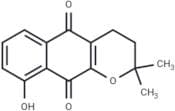
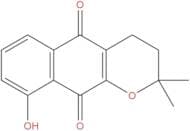
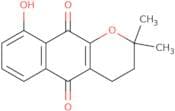
:9-Hydroxy-alpha-lapachone
Description:
9-Hydroxy-alpha-lapachone is a chemical compound derived from lapachone, a natural product found in the bark of the Tabebuia tree. It is characterized by its hydroxyl group at the 9-position, which contributes to its biological activity. This compound exhibits potential pharmacological properties, including anti-cancer, anti-inflammatory, and antioxidant activities, making it of interest in medicinal chemistry and drug development. The structure of 9-hydroxy-alpha-lapachone includes a naphthoquinone core, which is significant for its reactivity and interaction with biological systems. Its solubility and stability can vary depending on the solvent and conditions, influencing its bioavailability and efficacy. Additionally, research has indicated that it may induce apoptosis in cancer cells and modulate various signaling pathways, highlighting its potential therapeutic applications. As with many compounds, further studies are necessary to fully elucidate its mechanisms of action and potential side effects.
Sort by
Purity (%)
0
100
|
0
|
50
|
90
|
95
|
100
Found 4 products.
9-Hydroxy-α-lapachone
CAS:9-Hydroxy-alpha-lapachone inhibits H. pylori growth & LPS-induced NO in RAW 264.7 cells, both with IC50 of 4.64 µM; may also reduce inflammation.Formula:C15H14O4Purity:98%Color and Shape:SolidMolecular weight:258.279-Hydroxy-α-lapachone
CAS:Formula:C15H14O4Purity:95%~99%Color and Shape:Yellow powderMolecular weight:258.2739-Hydroxy-alpha-lapachone
CAS:Controlled Product9-Hydroxy-alpha-lapachone is a natural naphthoquinone derivative, which is extracted from the heartwood of the Lapacho tree (Tabebuia sp.). This compound exhibits a variety of biological activities due to its ability to modulate multiple cellular pathways. The mode of action primarily involves the induction of oxidative stress within cancer cells through the generation of reactive oxygen species (ROS), leading to apoptosis. It also inhibits topoisomerase enzymes, which are crucial for DNA replication and repair, thereby interfering with cancer cell proliferation.
Formula:C15H14O4Purity:Min. 95%Molecular weight:258.27 g/molRef: 3D-XAA33358
Discontinued product