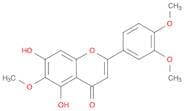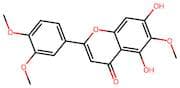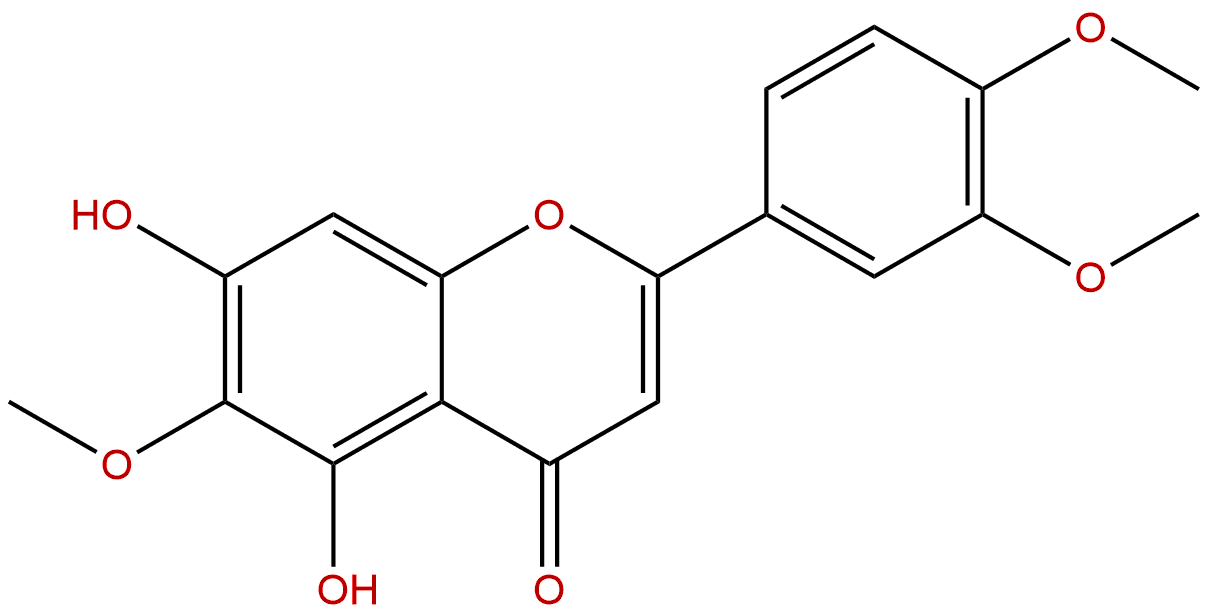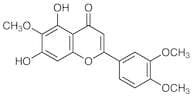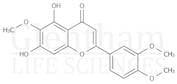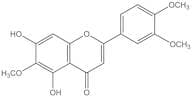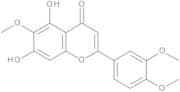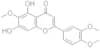
CAS 22368-21-4
:Eupatilin
Description:
Eupatilin, with the CAS number 22368-21-4, is a naturally occurring flavonoid compound primarily derived from various plants, particularly those in the Asteraceae family. It is known for its potential pharmacological properties, including anti-inflammatory, antioxidant, and hepatoprotective effects. Eupatilin exhibits a complex structure characterized by multiple hydroxyl groups, which contribute to its biological activity and solubility in polar solvents. The compound has garnered interest in medicinal chemistry due to its ability to modulate various biochemical pathways, making it a candidate for therapeutic applications. Additionally, eupatilin's safety profile and low toxicity in preliminary studies suggest its potential for use in dietary supplements or as a functional food ingredient. However, further research is necessary to fully elucidate its mechanisms of action and efficacy in clinical settings. Overall, eupatilin represents a promising area of study within natural product chemistry and pharmacology.
Formula:C18H16O7
InChI:InChI=1S/C18H16O7/c1-22-12-5-4-9(6-14(12)23-2)13-7-10(19)16-15(25-13)8-11(20)18(24-3)17(16)21/h4-8,20-21H,1-3H3
InChI key:InChIKey=DRRWBCNQOKKKOL-UHFFFAOYSA-N
SMILES:OC1=C2C(OC(=CC2=O)C3=CC(OC)=C(OC)C=C3)=CC(O)=C1OC
Synonyms:- 2-(3,4-Dimethoxyphenyl)-5,7-dihydroxy-6-methoxy-4H-1-benzopyran-4-one
- 2-(3,4-Dimethoxyphenyl)-5,7-dihydroxy-6-methoxychromen-4-one
- 2-(3,4-dimethoxyphenyl)-5,7-dihydroxy-6-methoxy-4H-chromen-4-one
- 4H-1-Benzopyran-4-one, 2-(3,4-dimethoxyphenyl)-5,7-dihydroxy-6-methoxy-
- 5,7-Dihydroxy-3′,4′,6-trimethoxyflavone
- 5,7-Dihydroxy-6,3′,4′-trimethoxyflavone
- Flavone, 5,7-dihydroxy-3′,4′,6-trimethoxy-
- NSC 122413
- Stillen
- Eupatilin
Sort by
Purity (%)
0
100
|
0
|
50
|
90
|
95
|
100
Found 12 products.
Ref: IN-DA00BDN5
1gTo inquire1mg50.00€5mg50.00€10mg66.00€25mg127.00€50mg171.00€100mg195.00€250mg328.00€2-(3,4-Dimethoxyphenyl)-5,7-Dihydroxy-6-Methoxy-4H-Chromen-4-One
CAS:2-(3,4-Dimethoxyphenyl)-5,7-Dihydroxy-6-Methoxy-4H-Chromen-4-OnePurity:99%Molecular weight:344.32g/molEupatilin
CAS:Eupatilinthe has anti-proliferative effect in MCF10A- ras cells, is associated with its blockade of cell cycle progression which appears to be attributable in part to inhibition of ERK1/2 activation.Formula:C18H16O7Purity:95%~99%Color and Shape:Yellow powderMolecular weight:344.319Eupatilin
CAS:Formula:C18H16O7Purity:>97.0%(HPLC)Color and Shape:White to Light yellow to Green powder to crystalMolecular weight:344.32Eupatilin
CAS:Eupatilin (NSC-122413), a flavone derived from Artemisia princepsPampanini, is a PPARα agonist, with pharmacological activity.Formula:C18H16O7Purity:98.53% - 99%Color and Shape:SolidMolecular weight:344.32Eupatilin
CAS:Oxygen-heterocyclic compoundFormula:C18H16O7Purity:≥ 95.0 % (HPLC)Color and Shape:PowderMolecular weight:344.32Eupatilin
CAS:Controlled ProductStability Hygroscopic
Applications Eupatilin maintains anticoagulant and antiplatelet activity isolated from the Artemisia princeps Pampanini flower.
References Ryu, R. et al.: Prev. Nutr. Food Sci., 18, 181 (2013);Formula:C18H16O7Color and Shape:Light Yellow To BeigeMolecular weight:344.32Eupatilin
CAS:Eupatilin is a flavonoid compound, which is derived from the Artemisia species. This plant-based source has been traditionally used in various medicinal applications across different cultures. Eupatilin’s mode of action involves inhibition of pro-inflammatory cytokines and modulation of signaling pathways associated with inflammation, such as the NF-kB pathway. Additionally, it has been found to possess antioxidant activities, which further contributes to its therapeutic potential.Formula:C18H16O7Purity:Min. 95%Color and Shape:PowderMolecular weight:344.32 g/mol